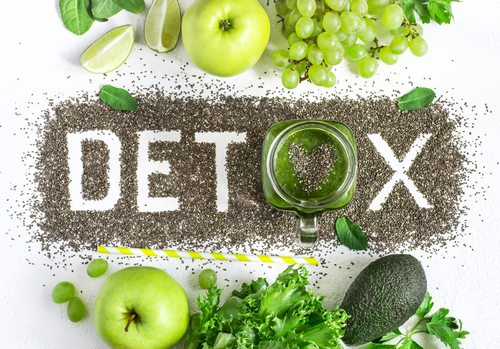
Let’s chat about detox pathways, because this is a question we get asked about all the time. We will discuss why it’s important to have them open and ways to support that.
So first things first, ideally, you would run a hair and saliva analysis by Balanced Health to help to see bioenergetically if your detox pathways are open in the first place. We will explain the ways that your body needs to detox.
Understanding the Importance of Detoxification

In most cases, many people usually start with a foundational approach to get their body prepared to detox. Before you can really even expel some of these different parasites, molds, etc, and begin clearing them, you really have to make sure that your pathways are open, that you’re draining properly, and that you have that foundational support before you even start to attempt to do any sort of cleanse. That part is crucial.
There are many misconceptions about ‘detox’ in general. For example, many mock anything about ‘detoxing’, mentioning that it is not really an issue because our own organs take care of all detoxification for us. This is true; our kidneys, liver, and lymphatic system do take care of that for us. However, we unfortunately live in a very different world than we use to. We are bombarded with things like glyphosate in our food, chemicals and metals in our water, consumption of factory farmed meat and farmed raised fish, all containing heavy amounts of harmful compounds. Even the air that we breathe is very, very different than what it used to be even just 5-10 years ago.
This idea that our detox organs are enough to clear out these toxins that we’re bombarded with on a consistent basis is just not realistic in terms of what we are exposed to on a daily basis.
This isn’t to scare you in any way; it’s just to make sure that you are aware that it’s important to really approach detox as a daily thing and not think it is simply like taking a Detox Cleanse for two weeks once a year and then you have magically ‘detoxed’ you’re entire body.
Four Pathways for Successful Detox
What I always recommend to clients is to think of your detox pathways in four different ways:
- Urination
- Defecation
- Breathing
- Sweating
You need to make sure that all four of those pathways are always functioning properly to ensure that you’re clearing things out on a consistent basis.
Urination – Staying hydrated enough so that you go to the bathroom on a consistent basis. This means you’re removing toxins through urination. One way that we do release chemicals and things like mold is through urine. You want to make sure you are roughly getting in half your body weight in ounces of water per day and also to make sure you’re adding in minerals at the proper ratios.
Defecation – This is probably one of the bigger ones because a lot of people really struggle with constipation. When it comes to a parasite cleanse in particular, if you are not having at least one bowel movement every day, ideally two to three bowel movements per day, you should not do a parasite cleanse. If you cannot remove them through feces you’re going to cause more harm than good by having toxins recirculating in your body.
Breathing – Holding our breath, as well as emotions, can be just as toxic as the food that we eat. So making sure that you’re doing some form of daily yoga, meditation, and/or breath work (alternate nostril breathing, belly breathing, etc). Clearing toxins out of our lungs as well as emotions on a consistent basis is so important. In many cases we see that people are doing all the right things, but they’re still struggling because they’re not really addressing the emotional aspect of their health. Learn more about how emotion affects organ health here.
Sweating – It is so important to sweat every day. If it is difficult to sweat from exercise every day, we often talk about Epsom salt baths while sipping on some ginger tea. Or if you have access to an infrared sauna, this is also a great way to sweat if you can tolerate heat. If you generally have a very difficult time sweating, this can be a red flag, that means you are not detoxing one of your main detox pathways.
Another thing in regard to balancing detox pathways like the lymphatic system is performing daily activities such as rebounding on a trampoline, jumping jacks, jumping rope, running stairs, any sort of running or jarring movement that can help stimulate the lymphatic system. Dry brushing can help as well!
In conclusion, that is essentially what the major four detox pathways are, how to support them, and why it’s so important to make sure that they are all properly working before you start to do any sort of cleanse.
DISCLAIMER: Balanced Health, LLC/CBH Energetics and any parent, subsidiary, affiliated, or related entities and companies do not provide medical advice or services. This post and the bioenergetic products and services offered by Balanced Health, LLC/CBH Energetics including, but not limited to, bioenergetic tests, bioenergetic scans, bioenergetic reports and related products and services (collectively the “Bioenergetic Products and Services”) are designed for educational and informational purposes only and are not intended to diagnose, treat, cure, or prevent any disease, condition, complaint, illness or medical condition and are not a substitute for professional services or medical advice. Testing is not used for the purpose of obtaining information for the diagnosis, prevention, or treatment of disease or the assessment of a health condition or for identification purposes.
