What Are Bioenergetic Exercises?
Bioenergetic exercises are movement-based practices combining breathing, grounding, and vibration to release tension, regulate the nervous system, and support detoxification.
Bioenergetics draws on principles from Eastern practices and Western philosophy to explore the concept of life energy, or bioenergy, that flows through the body.
That life energy has a formal scientific name: the biofield. The NIH first coined the term in 1992 to describe the field of energy and information that surrounds and moves through a living body — the same field bioenergetic exercises work with. Read more in our blog What Is the Biofield?
According to these principles, stress can manifest as tension throughout the body and create an energy imbalance. Bioenergetic practices address that imbalance by connecting emotions, body expressions, and muscles to release tension and stiffness.
Physical wellness is one of the four areas of self-care.
Bioenergetic exercises are helpful tools in bioenergetics that focus on the mind-body connection. These exercises help individuals by connecting with their bodies and releasing pent-up emotions, and can help support one’s holistic lifestyle.
In this guide, we will delve deeper into these exercises and their benefits for those interested in complementing their holistic lifestyle with activities that also help remove tension and stress from the body. Note that these are suggestions to enhance your well-being in conjunction with the natural remedies offered by CBH Energetics.
Why Bioenergetic Exercises Matter: 15 Years of Evidence
The Pattern I See In Practice
- You can have the right remedies.
- You can have the right nutrition.
- You can even have a perfectly mapped protocol.
If the body is not moving energy, the results plateau. Bioenergetic exercises help the body process, integrate, and shift what we uncover in testing. They support circulation, nervous system regulation, and detox pathways in a way that supplements alone cannot replicate. From a practical standpoint, the most successful clients are not just the ones following a protocol. They are the ones who are actively participating in their physiology daily through movement and breath.
What’s exciting is that current research is now validating what we’ve seen in practice for years.
The Science and Benefits of Bioenergetic Exercises
1. Nervous System Regulation
Breathwork and slow movement directly influence the autonomic nervous system, increasing heart rate variability and supporting a shift out of chronic stress states. This is critical because many clients are stuck in a sympathetic “fight or flight” pattern that blocks healing. (2)
2. Brain Function + Neuroplasticity
2026 research shows that exercise increases brain plasticity and supports structural changes in areas tied to memory, focus, and coordination. (3) This aligns with what we see on bioenergetic Brain Scans when clients begin incorporating movement.
3. Mood + Emotional Regulation
A large 2026 review found that exercise can improve depression and anxiety at levels comparable to therapy in some cases. This reflects improved neurotransmitter balance and reduced inflammatory signaling. (4)
4. Vibration + Cellular Activation
Vibration-based exercises (5) have been shown to improve neuromuscular function, circulation, and even cognitive performance. There is also emerging 2026 data showing improvements in strength, blood flow, and overall function with vibration modalities. One of the clearest patterns I see is how much faster clients shift when bioenergetic exercises are layered in. (6)

Types of Bioenergetic Exercises
You can perform different exercises to bring awareness to tense areas of the body. Here is a look at some of the most popular types of exercises known for enhancing the holistic lifestyle:
Bioenergetic Grounding Exercises
Grounding exercises bring you holistic balance by connecting you with the earth and helping you draw energy from the ground.
To do a grounding exercise:
- Find a quiet place where you can stand barefoot.
- Close your eyes and center yourself by taking deep breaths.
- Visualize roots growing from the soles of your feet, connecting you to the earth below.
- Imagine pulling energy from the ground through these roots and into your body.
- Feel the support of the earth beneath you, allowing yourself to feel strong and grounded.
Mindful Walking
Mindful walking is one of the bioenergetic exercises that combines movement with mindfulness and brings awareness to each step.
To practice mindful walking:
- Find a quiet place where you can walk uninterrupted.
- Stand still and take a few deep breaths to center yourself.
- Begin walking and pay attention to the sensation of each step as your foot lifts, moves forward, and contacts the ground.
- Notice the rhythm of your breath and the movement of your body as you walk.
- If your mind starts to wander, gently bring your attention back to the present moment and continue walking mindfully.
- Practice this exercise for as long as it feels comfortable, allowing yourself to fully immerse in the experience.
Bioenergetic Breathing Exercises
Breathing practices are among the most helpful bioenergetic exercises. Breathwork is the answer to body-wide stress, as it helps regulate energy flow and promote relaxation.
Here are the two most popular types of breathing exercises in bioenergetics.
Deep Belly Breathing
Deep belly breathing involves taking slow, deep breaths through the belly rather than the chest to calm the mind and body.
To practice deep belly breathing, we suggest that you:
- Find a comfortable seated or lying position.
- Place one hand on your chest and the other on your abdomen.
- Inhale deeply through your nose, feeling your abdomen rise and expand while keeping your chest still.
- Exhale slowly through the mouth, allowing your abdomen to contract.
- Repeat this bioenergetic exercise, focusing on the sensation of air moving in and out of your body with each breath.
Energizing Breathwork
Energizing breathwork involves taking deep and quick breaths to improve focus and mental clarity.
For energizing breathwork:
- Sit or stand in a comfortable position.
- Inhale quickly and deeply through your nose, filling your belly with air.
- Exhale rapidly through your mouth, making a whooshing sound as you release the breath.
- Continue this rapid breathing pattern for 1-2 minutes.
- Slow your breath gradually and return to a regular pace.
- Feel the energizing effects of the exercise as you complete the breathwork.
Vibration Bioenergetic Exercises
Another group of bioenergetic exercises is vibration therapy, which uses a vibrating device to stimulate muscles and increase circulation.
Movement-based Exercises
Movement-based exercises involve deliberately moving and shaking your body to release tension stored in the muscles.
To try movement-based bioenergetic exercises:
- Start by standing with your feet hip-width apart.
- Close your eyes and shake your body, starting from your feet and moving up through your legs, torso, arms, and head.
- Let go of any tension or thoughts, and allow your body to move freely.
- Shake for a few minutes, then gradually slow down and stand still.
- Take a few deep breaths and notice how you feel afterward.
Client Results: Before and After
Here is a client’s before that showed:
- Stress across System Performance in multiple systems (especially detox, nervous system, and energy production)
- Brain fog, constipation, aches, and pains
- Minimal improvement despite multiple efforts with changing diet
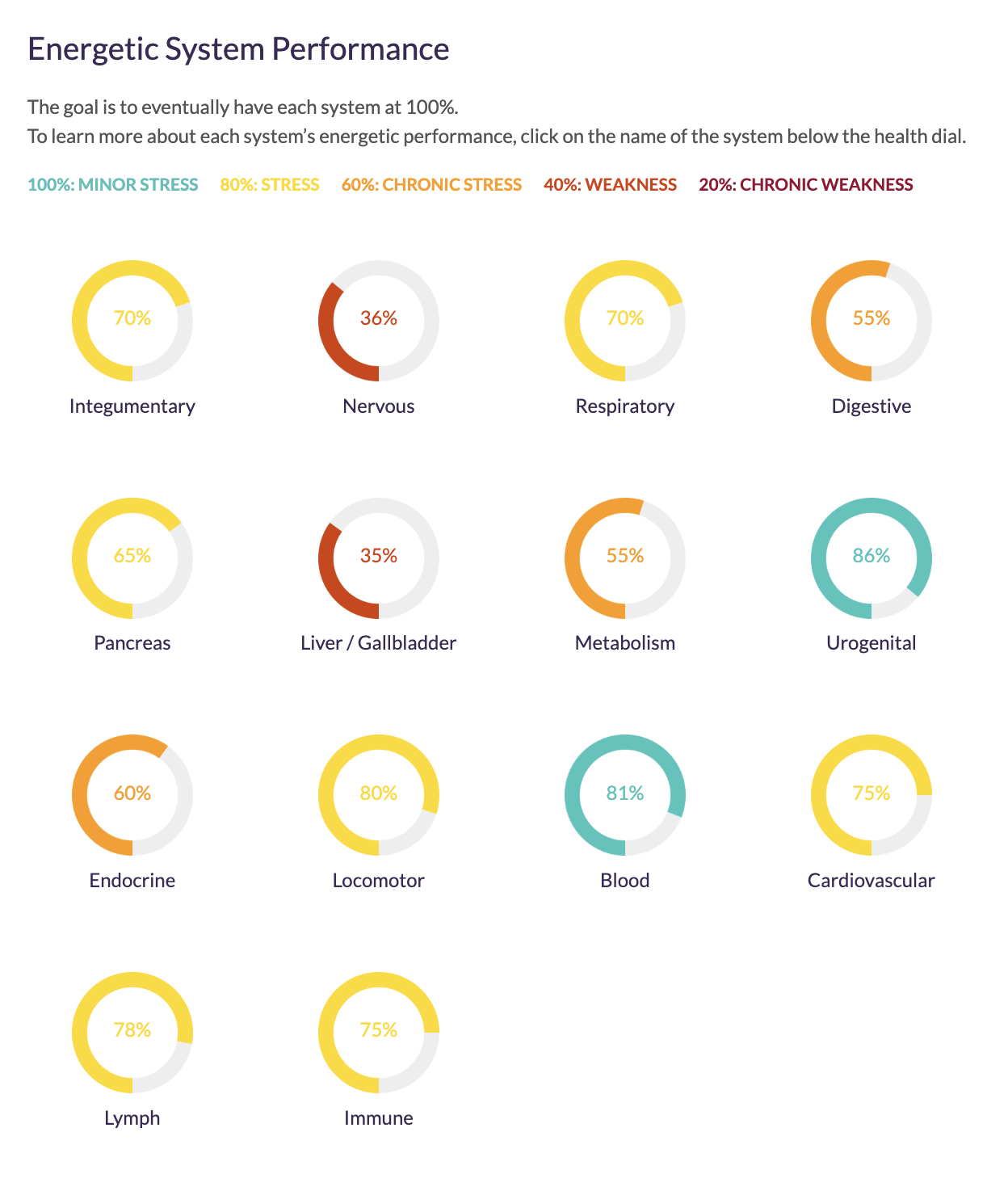
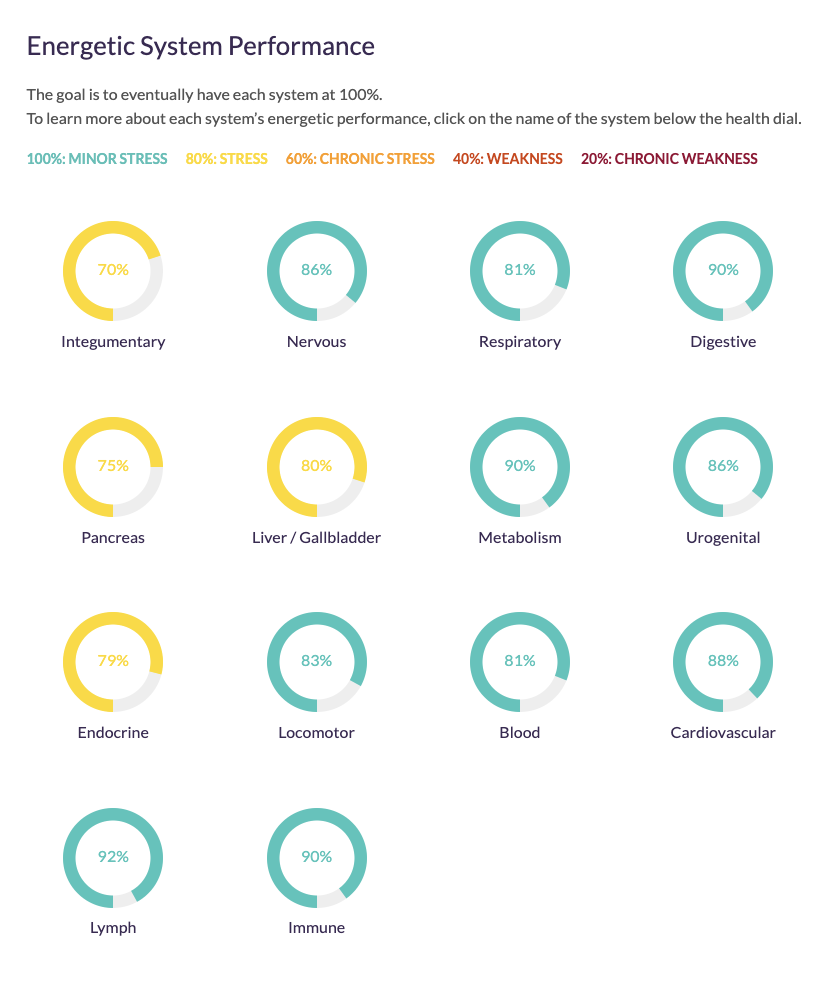
After (8–12 weeks with personalized remedies + nutrition + bioenergetic exercises):
- Noticeable improvement in System Performance across the board
- Improved mental clarity, digestion, and energy
- Better stress response and emotional regulation
- Reduced symptom intensity and frequency
- Improve circulation and lymphatic flow
- Support detox pathways
- Regulate the nervous system
- Enhance how the body uses nutrients and remedies
Bioenergetic exercises are movement-based practices that support energy flow, nervous system balance, and detoxification in the body.
They are important because they:
- Help the body process toxins and stress
- Improve brain function and emotional regulation
- Support circulation and cellular communication
- Enhance the effectiveness of nutrition and supplements
Frequently Asked Questions About Bioenergetic Exercises
How long should I practice bioenergetic exercises?
Start with 10-15 minutes daily. Most clients report noticeable improvements in energy and stress levels within 2-4 weeks of consistent practice.
Can I do bioenergetic exercises at home?
Yes! Many of the exercises in this guide can be done at home with no equipment. Simply find a quiet space and follow the step-by-step instructions.
What’s the difference between bioenergetic exercises and regular exercise?
Bioenergetic exercises focus on energy flow, nervous system regulation, and emotional release—not just physical fitness. They’re designed to restore balance, not deplete energy.
Start Your Wellness Journey With CBH Energetics
Are you excited to incorporate bioenergetic exercises into your daily routine and improve your mental and physical health? CBH Energetics can help!
We can help you detect sensitivities and areas of tension throughout your body with our bioresonance testing.
Contact us today to learn more about our services and start your healing journey with our holistic solutions.
About the Author Samantha Stupak
Samantha Stupak is the Founder of CBH Energetics with over 12 years of experience and more than 50,000 bioenergetic scans analyzed worldwide. Her work focuses on identifying patterns of imbalance across systems and helping clients and practitioners understand the deeper connections driving their health challenges. Her methodologies are applied across thousands of client cases annually. Her areas of expertise include bioenergetic testing, hormone balancing, detoxification, nervous system regulation, metabolic health, and Lyme disease. She also sits on the board of the American Intervention Institute.
Hear Samantha’s Story and connect with her here: LinkedIn Profile
Her work and insights have been featured in:
- Be Organic Podcast
- The Pet Parenting Reset
- Healthy by Heather Brown
- Voyager Minnesota Publication
- Baumen Wellness with Dr. Ed Bauman
- Break the Rules Podcast with Dr. Lauryn Lax
Explore CBH platforms:
References:
1. Adams, A. (2025, September 22). Exercise induces whole-body health benefits. Stanford Medicine Magazine. https://stanmed.stanford.edu/exercise-whole-body-benefits/
2. Zaccaro, A., Piarulli, A., Laurino, M., Garbella, E., Menicucci, D., Neri, B., & Gemignani, A. (2018). How Breath-Control Can Change Your Life: A Systematic Review on Psycho-Physiological Correlates of Slow Breathing. Frontiers in Human Neuroscience, 12, 353.https://pmc.ncbi.nlm.nih.gov/articles/PMC6137615/
3. Safaeipour, C., Sherzai, D., & Zikria, B. (2026). Exercise and brain health. PubMed. https://pubmed.ncbi.nlm.nih.gov/41523152/
4. Munro, N.R., Teague, S., Somoray, K., Simpson, A., Budden, T., Jackson, B., Rebar, A., & Dimmock, J. (2026). Effect of exercise on depression and anxiety symptoms: systematic umbrella review with meta-meta-analysis. British Journal of Sports Medicine. https://www.sciencedaily.com/releases/2026/02/260213020412.htm
5. Shantakumari, N., & Ahmed, M. (2023). Whole body vibration therapy and cognitive functions: a systematic review. AIMS Neuroscience, 10(2), 130–143. https://doi.org/10.3934/Neuroscience.2023010
6. Gattner, H., Adamiak, J., Czerwińska-Ledwig, O., Mętel, S., & Piotrowska, A. (2026). Acute and Chronic Effects of Whole-Body Vibration Training on Oxidative Stress and Cellular Damage Markers in Young Adults. International Journal of Molecular Sciences, 27(2), 899. https://doi.org/10.3390/ijms27020899
DISCLAIMER: Balanced Health, LLC/CBH Energetics and any parent, subsidiary, affiliated, or related entities and companies do not provide medical advice or services. This post and the bioenergetic products and services offered by Balanced Health, LLC/CBH Energetics including, but not limited to, bioenergetic tests, bioenergetic scans, bioenergetic reports and related products and services (collectively the “Bioenergetic Products and Services”) are designed for educational and informational purposes only and are not intended to diagnose, treat, cure, or prevent any disease, condition, complaint, illness or medical condition and are not a substitute for professional services or medical advice. Testing is not used for the purpose of obtaining information for the diagnosis, prevention, or treatment of disease or the assessment of a health condition or for identification purposes.
