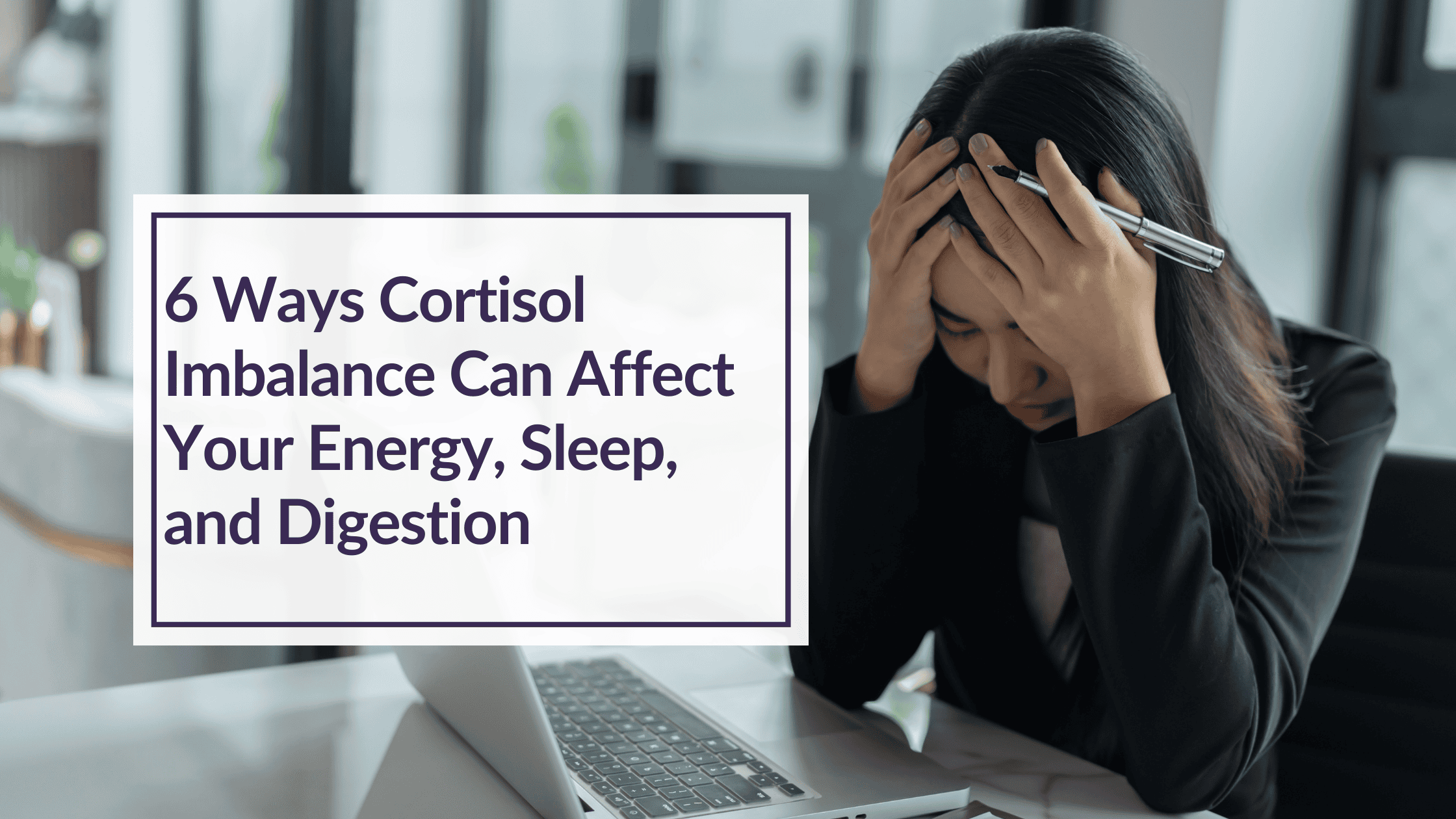
What Cortisol Imbalance Can Look Like in Real Life
We all know cortisol as the stress hormone. It gets a bad rap! Social media, wellness conversations, casual chats with friends… “Ugh, my cortisol must be high.”
But with all that talk, the real story of cortisol gets a little lost.
Yes, cortisol is a stress hormone. But that’s only part of the picture. Cortisol is actually one of the body’s main messengers. It helps your body decide when to wake up, when to feel alert, when to release energy, when digestion slows down, and when it’s time to rest and recover.
Cortisol isn’t the super villain, though. What causes trouble is when cortisol signaling doesn’t shut off when it’s supposed to, or when it starts showing up at the wrong times of day. That’s when cortisol imbalance can begin to affect how you feel from morning to night.
Imbalanced cortisol reflects the body’s adaptation to repeated pressure across multiple systems.
What Cortisol Does in the Body (and Why It’s Easy for It to Stay Elevated)
Cortisol is made by your adrenal glands when your brain senses a demand. That demand doesn’t have to be dramatic; it can be a rushed morning, skipped meals, poor sleep, emotional stress, long workdays, hard workouts, or simply being “on” for too long without recovery.
Cortisol’s role is to help the body adapt. It works across multiple systems at once, influencing energy availability, blood sugar between meals, sleep timing, digestion, inflammation, and cardiovascular tone.
Under steady conditions, cortisol follows a daily rhythm, higher in the morning to help you get going, and lower in the evening so your body can wind down. This pattern, often referred to as the cortisol awakening response, is well documented as part of how the body regulates alertness and energy throughout the day. Short-term stress hormones, like epinephrine (adrenaline), act fast and settle quickly. Cortisol works on a longer timeline. It’s regulated through a feedback loop between the brain and adrenal glands (often referred to as the HPA axis) that responds to ongoing demand, not just emergencies.
When that demand keeps coming, cortisol keeps getting released. Over time, its natural rise-and-fall pattern can flatten or shift. According to stress researcher Bruce McEwen, ongoing demand on the body’s stress systems — rather than short-lived stress — can disrupt the regulation of stress hormones like cortisol over time, a concept known as allostatic load. That’s when cortisol stress becomes cortisol imbalance, not because cortisol is malfunctioning, but because the system hasn’t had enough clear “off” signals.
This is why cortisol imbalance often feels subtle but persistent.

6 Ways Cortisol Imbalance Can Affect Your Energy, Sleep, and Digestion
1. Your Energy Feels Unpredictable
When cortisol is imbalanced, energy stops following a reliable pattern. You might wake up already tired, feel okay mid-morning, and then crash hard, rely on caffeine to feel normal, or get a second wind late at night when you’re trying to wind down.
This isn’t about motivation or discipline. With imbalanced cortisol, energy may be available — just not when you actually need it.
2. You’re Tired, but Sleep Doesn’t Fix It
Cortisol is supposed to quiet down at night. When it doesn’t, sleep can feel light, restless, or unrefreshing.
This often looks like trouble falling asleep despite exhaustion, waking the night with an alert mind (commonly between 2–4 a.m.), or sleeping enough hours but still feeling wiped. One study found that people with poor sleep efficiency showed greater cortisol elevations during stress and slower recovery, suggesting that sleep quality affects cortisol release and regulation.
In many cases, sleep looks “fine on paper,” but stress signaling hasn’t fully quieted yet.

3. You Don’t Handle Skipped Meals Very Well
Cortisol helps manage blood sugar between meals. When cortisol stress is ongoing, that balance can feel harder to maintain.
You might notice:
- Irritability or shakiness when meals are delayed
- Sudden cravings that feel urgent
- Energy dips shortly after eating
- Needing snacks just to stay steady
Research shows that cortisol helps regulate blood sugar. When stress is ongoing, the body can rely on cortisol more often to keep energy available, making blood sugar swings feel more noticeable.
4. Digestion Feels “Off” More Often Than Not
Digestion is sensitive to stress signaling. When cortisol is elevated, the body prioritizes alertness over digestion.
People often describe bloating without a clear trigger, an inconsistent appetite, or food sitting heavy longer than it used to. Studies in Gut and Neurogastroenterology & Motility show that stress hormones can influence gut motility and digestive secretions through nervous system pathways.
5. Your Stress Tolerance Isn’t What It Used to Be
One of the most relatable signs of cortisol imbalance is how quickly stress feels overwhelming. Smaller things may bother you more, emotional reactions may feel bigger than expected, and recovery after busy days can take longer.
According to researchers studying allostatic load, this reflects how repeated stress exposure can change the nervous system’s response over time— not a lack of resilience, but a system that’s been running “on” for too long.
6. You Have a Hard Time Fully Relaxing
Even during downtime, your body may struggle to fully power down.
This can look like:
- Difficulty relaxing even when nothing is wrong
- Trouble mentally switching off
- Tension during rest
- Feeling like rest doesn’t actually restore you
With ongoing cortisol stress, the body doesn’t always get a clear signal that it’s safe to slow down.
Cortisol imbalance can also influence things like mood, immune resilience, blood pressure, and how the body responds to exercise, which is why its effects often feel widespread rather than isolated.
How Cortisol Shows Up in a CBH Energetics Full Scan
Cortisol interacts with nearly every major system in the body. That’s why cortisol stress doesn’t usually show up as one isolated issue. It shows up as patterns—energy, sleep, digestion, mood, and recovery influencing each other.
Cortisol imbalance becomes clearer when you look at how systems communicate, not just how stress is experienced. Each CBH Energetics Full Scan report begins with a review of 14 core systems that act as an energetic health dial, including the Endocrine and Nervous Systems, which play major roles in stress signaling and cortisol regulation.
The bioenergetic test also includes an Energetic Hormonal Imbalances section, where patterns related to hormones like cortisol are assessed directly. This helps show not just where stress is being felt, but how hormonal signaling is responding overall.
To add more context, we also assess 58 individual points tied to system communication and performance, including key areas involved in cortisol regulation such as the hypothalamus, pituitary, and adrenal glands.
Because cortisol stress often reflects cumulative load, the scan may also highlight patterns related to nutrient demand (such as minerals involved in stress response and hydration), detoxification stress, inflammatory signaling, or environmental burden, all of which can influence how resilient the stress response feels over time.
This layered view helps explain why cortisol stress looks different from person to person, and why timing, rhythm, and system communication matter more than focusing on a single hormone alone.
How Can You Bring Cortisol Back to Balance?
Support should really focus on helping the body recover between demands rather than on controlling cortisol directly. That could start with reinforcing the foundations!
- Hydration and electrolytes help support fluid balance and daily stress demands. Our adrenal cocktail blog explores a commonly discussed approach that focuses on replenishing foundational resources, such as electrolytes, when life feels especially demanding.
- Steady fuel, including regular meals with adequate protein and carbohydrates
- Nervous system support, such as mindfulness, breathwork, or short pauses during the day, that help shift the body out of constant “on” mode
- Consistent daily rhythms, especially around sleep, wake time, and meals
- Movement that supports recovery, rather than pushing through fatigue
- Intentional downshifting, particularly in the evening, so stress signaling has space to settle
- Targeted nutrients, herbs, or botanicals are often explored to support stress response and recovery during periods of higher demand
Because cortisol stress load, recovery capacity, and nutrient needs vary from person to person, these approaches are best viewed as supportive tools rather than one-size-fits-all solutions.
Learn more about the CBH Energetics Full Scan here.
About the Author:
Samantha Stupak is the Founder of CBH Energetics with over 12 years of experience and more than 50,000 bioenergetic scans analyzed worldwide. Her work focuses on identifying patterns of imbalance across systems and helping clients and practitioners understand the deeper connections driving their health challenges. Her methodologies are applied across thousands of client cases annually. Her areas of expertise include bioenergetic testing, hormone balancing, detoxification, nervous system regulation, metabolic health, and Lyme disease. She also sits on the board of the American Intervention Institute.
Hear Samantha’s Story and connect with her here: LinkedIn Profile
Her work and insights have been featured in:
- Be Organic Podcast
- The Pet Parenting Reset
- Healthy by Heather Brown
- Voyager Minnesota Publication
- Baumen Wellness with Dr. Ed Bauman
- Break the Rules Podcast with Dr. Lauryn Lax
Explore CBH platforms:
DISCLAIMER: Balanced Health, LLC/CBH Energetics and any parent, subsidiary, affiliated, or related entities and companies do not provide medical advice or services. This post and the bioenergetic products and services offered by Balanced Health, LLC/CBH Energetics including, but not limited to, bioenergetic tests, bioenergetic scans, bioenergetic reports and related products and services (collectively the “Bioenergetic Products and Services”) are designed for educational and informational purposes only and are not intended to diagnose, treat, cure, or prevent any disease, condition, complaint, illness or medical condition and are not a substitute for professional services or medical advice. Testing is not used for the purpose of obtaining information for the diagnosis, prevention, or treatment of disease or the assessment of a health condition or for identification purposes.
