Your blood work came back normal.
Again.
Yet here you are, exhausted, foggy, and bloated. Searching ‘normal blood work but still sick’ at midnight.
Between 15% and 30% of all primary care visits involve symptoms that standard testing simply can’t explain.(1) That’s not a small number. That’s potentially one in four people sitting in a doctor’s office with real, persistent symptoms and a stack of results that say “you’re fine.”
This scenario, or scenarios like it, drives thousands of people to explore testing methods beyond conventional diagnostics. Bioresonance testing and other functional medicine testing have both seen explosive interest. Bioresonance testing, in particular, has emerged as a complementary approach that measures what standard lab work often misses. But they work very differently from blood work, and understanding the difference is the only way to use them intelligently.
I’m Samantha Stupak, founder of CBH Energetics, and my journey into bioenergetic testing began when conventional medicine couldn’t explain my chronic symptoms. Here’s the comprehensive comparison I needed years ago.
What Blood Work Actually Does—And What It Was Designed For
Blood work is one of the most used diagnostic tools in medicine. It excels at detecting disease with measurable, reproducible precision.
Standard blood panels measure specific biochemical markers, such as glucose levels, liver enzymes, kidney function, complete blood counts, and hormone levels. Blood work tests designed to identify when something has crossed a clinical threshold: when your body has moved from “functioning, even if imperfectly” to “this is a diagnosable disease that needs treatment.”
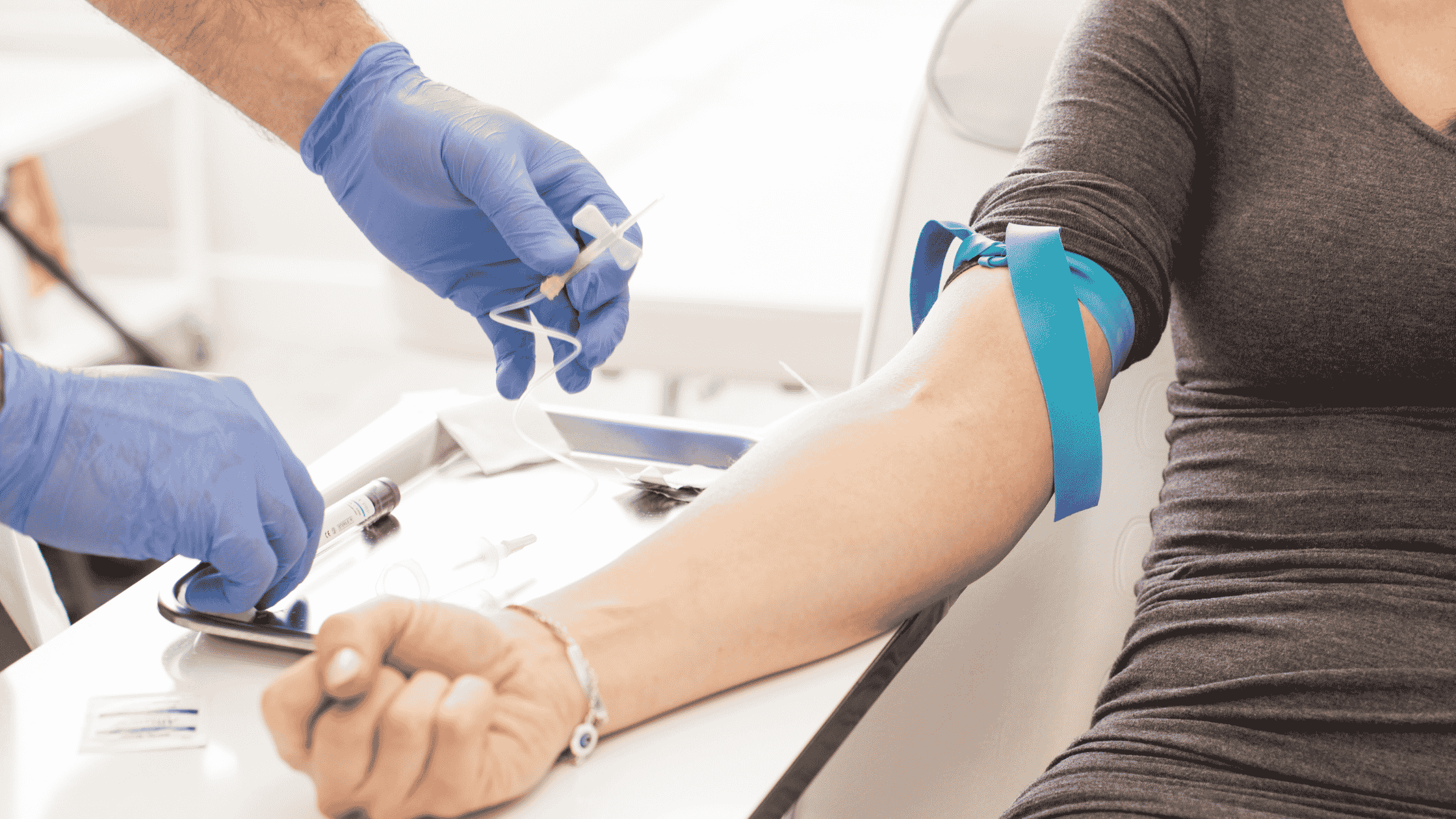
What Blood Work Is Great At:
- Identifying acute conditions (infections, fractures, appendicitis)
- Diagnosing established diseases like diabetes, cancer
- Monitoring known conditions, such as cholesterol or thyroid medication effectiveness.
| Blood Test Type | What It Measures | Best For |
| Blood Chemistry Panel | Glucose, electrolytes, liver and kidney function markers | Metabolic disease, organ function assessment |
| Complete Blood Count (CBC) | Red and white blood cells, platelet counts | Anemia, infections, blood disorders |
| Thyroid Panel (TSH, T3, T4) | Thyroid hormone levels | Hypothyroidism, hyperthyroidism |
| Lipid Panel | LDL, HDL, total cholesterol, triglycerides | Cardiovascular disease risk |
| IgE Allergy Testing | Immediate immune responses to specific allergens | Severe food and environmental allergies |
Blood Work’s Limitations
Here is where many people get frustrated.
Blood work is built around thresholds: your numbers must fall outside the “normal range” before anything is flagged. A reference range is defined as the set of values that 95% of the normal population falls within. It’s a statistical prediction interval, not a definition of optimal health. Your optimal range and the population average are not the same thing.(5)
The math problem: Normal ranges are determined by examining a large sample of healthy individuals and setting the range to include 95% of that sample, which means if you test one biochemical marker in a perfectly healthy person, there is a 5% chance it will fall outside the normal range purely by chance. Run a standard panel of 20 markers, and the math gets uncomfortable fast. (6)
Real-world example: Someone can have a TSH of 2.1 (technically normal), be dragging through every day, and receive a clean bill of health. Their thyroid isn’t “broken enough to register.” The symptom doesn’t reach the threshold. The test does exactly what it was designed to do, and still leaves the person without answers.
The Overutilization Problem
A large-scale Harvard Medical School analysis of 1.6 million results from 46 of medicine’s 50 most commonly ordered lab tests found that, on average, 30% of all tests are probably unnecessary, and an equally significant number of necessary tests may be going unordered. (7) One in every five inpatient laboratory tests ordered doesn’t contribute to the advancement of patient care. ⁸
The nuance: A result outside the reference range doesn’t necessarily mean something is wrong, just as a result inside it doesn’t guarantee everything is fine. That nuance is what makes blood work a powerful tool in the right hands, and an incomplete picture when used as the only lens.
When Blood Work is Non-Negotiable
Suspected serious disease (cancer, diabetes, heart disease), acute severe symptoms (chest pain, sudden vision loss, severe bleeding), requirements for insurance, disability, or prescription authorization, and monitoring of any diagnosed conditions. No alternative or complementary test replaces blood work in these scenarios.
What A Bioresonance Test Measures
Bioresonance testing does not diagnose disease.
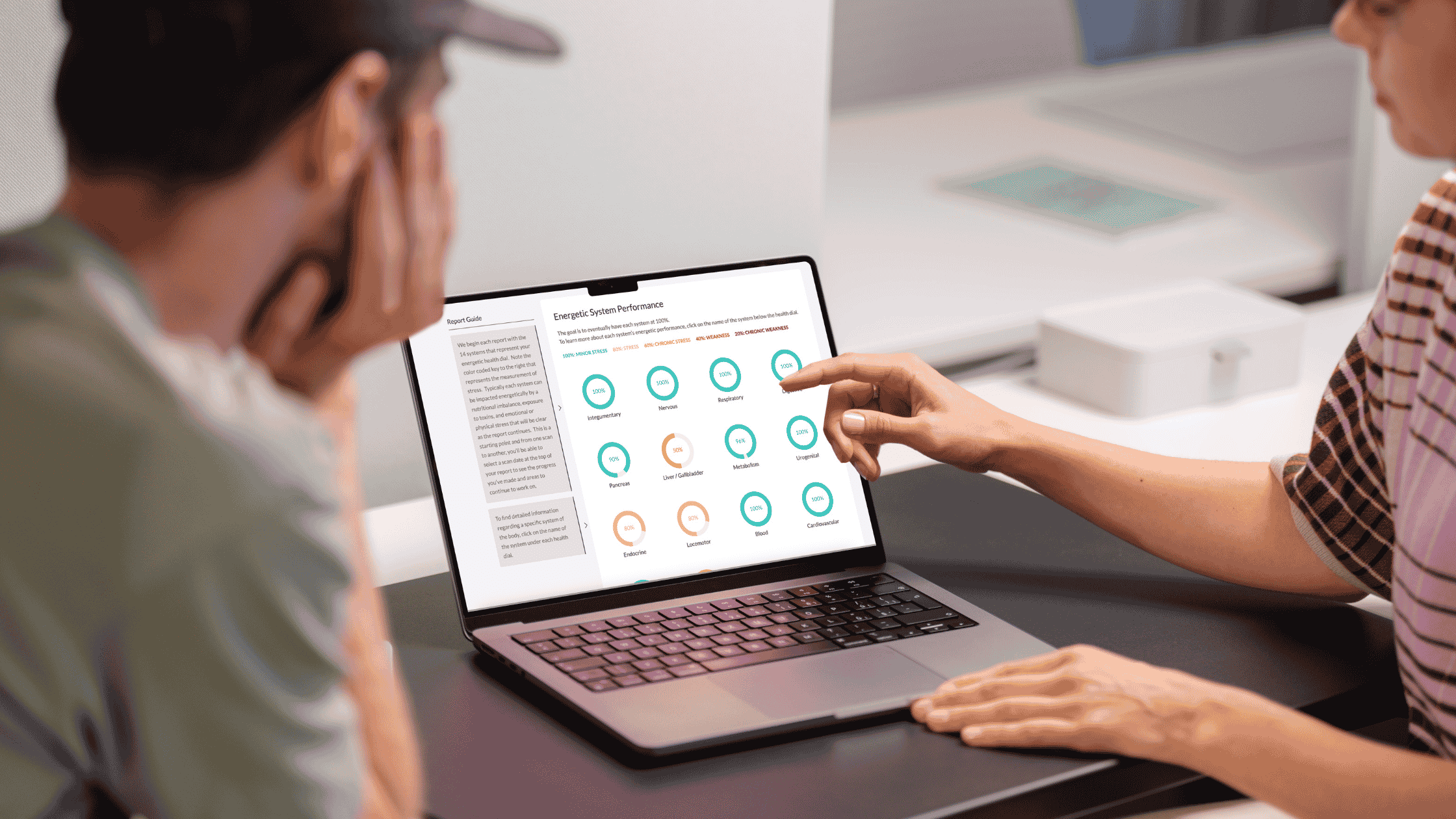
What it does, and what tens of thousands of our clients at CBH Energetics have found genuinely useful, is measure energetic stress patterns in body systems. Rather than asking “has this person crossed the threshold into diagnosable disease?” it asks a different question: “where is this body showing signs of stress and functional imbalance?”
The Science Behind The Scan
Every living cell emits electromagnetic frequencies. This isn’t an alternative theory; it’s measurable biology. Your heart produces electrical signals that an EKG can detect. Your brain produces waves measured by an EEG. Bioresonance technology, also known as bioenergetics, operates on the same foundational principle: that biological tissue communicates through frequency patterns, and that disruptions in those patterns can reflect areas of stress or imbalance in the body.
Bioresonance devices work by analyzing frequency responses from biological samples, in our case, hair and saliva, and comparing them against a reference library of known patterns associated with foods, pathogens, environmental compounds, nutrients, hormones, organs, and body systems. The result is a map of where your body’s energetic responses show specific levels of stress or dysregulation.
This is distinct from conventional diagnostics, which measure physical or chemical markers in blood or tissue. Bioresonance measures energetic response patterns earlier on the continuum, before pathology has fully developed.
Emerging research in bioelectromagnetic medicine and quantum biology continues to explore the mechanisms; the field is growing, not settled. We present bioresonance results as informational stress-pattern data, not as medical diagnoses.
Think of It Like This
A bioresonance test is less like a medical test and more like a functional road map. It doesn’t tell you your house is on fire. It notices that the smoke detector batteries are low, the downstairs vent is blocked, and three windows don’t seal properly before anything catches fire.
The CBH Energetics Process
Our testing process is non-invasive. You submit a hair and saliva sample at home, and if you’ve ordered our most comprehensive test, the Full Scan, it analyzes energetic stress patterns across 2500+ items like:
Hormonal Imbalances – Thyroid, adrenal, reproductive hormone stress patterns
Food Sensitivities – food and food-related items potentially causing inflammation
Environmental Sensitivities – Mold, pollen, chemicals, heavy metals
Resonating Pathogens – Bacteria, viruses, parasites, mold, Borrelia burgdorferi (the bacteria that cause Lyme disease), and more
Nutritional Deficiencies – Vitamins, minerals, amino acids, fatty acids
Drainage Pathway Stress – Liver, lymphatic, respiratory, kidney function
Digestive System Stress – Gut inflammation, candida, enzyme deficiencies
The method measures how the body’s energy field responds to various signatures in hertz, with no blood draws needed.
Questions about Bioresonance
Bioresonance takes a different path than conventional medicine, and understanding both perspectives makes you a sharper, more informed consumer — one who’s harder to mislead in any direction.
The questions most commonly raised by the medical and scientific community fall into a few consistent categories.
Legitimacy. Bioelectromagnetic signaling is an established area of research that bridges biology and physics, with a history tracing back to Luigi Galvani’s work in the 18th century, and has been built upon by researchers at major institutions to the present day. (9)
Bioelectromagnetics, a globally recognized peer-reviewed journal, has been publishing original research on electromagnetic fields and biological systems across a broad frequency spectrum for decades. Bioenergetic testing, which gathers information about the body’s energetic patterns, sits within that broader scientific conversation, even as specific protocols are still being studied. Asking good questions about any health tool is smart. Just make sure you’re asking them about the right thing. (10)
Regulatory classification. No bioresonance device can be legally marketed in the United States for diagnostic or treatment purposes. This is why responsible practitioners, including our team at CBH Energetics, present bioenergetic scan results as energetic stress pattern data rather than medical diagnoses.
Where Functional Medicine Testing Fits In
Functional medicine testing sits closer to conventional medicine but asks broader questions than a standard panel. The core philosophy of functional medicine is to find the root cause of symptoms rather than manage them after the fact.
Rather than looking only for disease states, functional medicine diagnostics examine the body’s biological systems for imbalances and dysfunctions across immune function, hormonal regulation, digestive health, detoxification pathways, and nutritional status.
Bioresonance testing is complementary to functional medicine testing as they ask similar questions about the body, but through different lenses.
- Functional medicine testing uses advanced biochemical lab analysis.
- Bioresonance testing measures energetic stress patterns.
The underlying philosophy is shared: both look upstream to orient toward root cause, and both are used by integrative practitioners as tools for understanding the fuller picture of a person’s health.
Many of the integrative and functional medicine practitioners who work with CBH Energetics use bioresonance testing alongside functional lab testing.
Common functional medicine tests include:
- Comprehensive stool analysis — examining gut microbiome diversity, pathogenic bacteria, parasites, and digestive markers
- Organic acids testing — measuring metabolic byproducts in urine to assess nutrient deficiencies, mitochondrial function, and neurotransmitter metabolism
- Advanced hormone panels — including cortisol curves taken at multiple points throughout the day, rather than a single snapshot
- Micronutrient testing — assessing cellular-level nutrient status rather than serum levels alone
- Genetic panels — examining metabolic predispositions like MTHFR mutations that affect how the body processes nutrients
Market growth: The functional medicine lab testing market was valued at $12.5 billion in 2024 and is projected to reach $25 billion by 2033. (4) A 2022 review found that the acceptance and use of complementary and alternative medicine among medical specialists has been growing across ten specialties, including internal medicine, pediatrics, obstetrics, anesthesiology, and surgery. That growth reflects a genuine shift in how both practitioners and patients are thinking about chronic health. (11)
Blood Work vs. Bioresonance Test vs. Functional Medicine Testing: The Direct Comparison
| Factor | Blood Work | Bioresonance Test | Functional Medicine Testing |
| What it measures | Biochemical markers, disease states, pathology | Energetic stress patterns and functional imbalances | Root cause imbalances across body systems |
| Primary purpose | Diagnose disease, monitor conditions | Identify areas of stress for a personalized approach | Personalized root cause assessment |
| Sample type | Blood | Hair and saliva | Blood, urine, stool, saliva |
| Invasiveness | Often invasive — needles, imaging | Completely non-invasive | Varies — mostly non-invasive |
| Detection threshold | Must exceed clinical “normal range” | Can detect subtle energetic imbalances and stress factors | Looks for suboptimal ranges, not just pathology |
| Insurance coverage | Usually covered | Not covered | Rarely covered |
| Turnaround time | Hours to days | 5–7 business days | Days to weeks |
| Best use case | Acute illness, disease diagnosis, monitoring | Chronic unexplained symptoms, holistic overview, personalized support | Chronic conditions, prevention, personalized care |
Real Scenarios: When Each Approach Provides Value
The clearest way to understand these tools is to watch them work.
Scenario 1
Sarah, 34 — 18 months of debilitating fatigue
Blood work results
- TSH: 2.1 (normal range 0.4–4.0)
- Iron: 85 (normal range 60–170)
- CBC: all within normal limits
- — Clinical conclusion: no pathology found
Bioenergetic scan findings
- Epstein-Barr virus resonance
- Food sensitivity patterns: gluten, dairy, eggs
- Adrenal stress pattern
- Mold toxin resonance
- Vitamin D and B12 energetic imbalances
Sarah worked hard to clear the EBV and mold exposure, eliminate trigger foods, and begin targeted supplementation. Significant energy improvement within three months. What makes Sarah’s case instructive is how the findings connect. EBV reactivation is frequently triggered by mold toxin exposure and chronic immune stress, two patterns that both appeared in her scan. The adrenal stress pattern is consistent with a body that has been fighting something undetected for months. The food sensitivity findings — gluten, dairy, eggs — are among the most common drivers of systemic inflammation that amplifies viral reactivation symptoms. None of these connections would appear on a standard blood panel because none had crossed a diagnostic threshold. Together, they told a coherent story.
Scenario 2
Mike, 47 — two years of severe bloating and digestive irregularity
Blood work results
- Colonoscopy: clear, no abnormalities
- Celiac panel: negative
- H. pylori test: negative
- — Clinical conclusion: IBS diagnosis
Bioenergetic scan findings
- Candida pattern
- Drainage pathway stress (liver, lymph, stomach)
- Sensitivities to 12 common foods
- Digestive enzyme & low stomach acid imbalances
Mike addressed gut health, drainage pathways, and food elimination. Symptoms reduced approximately 80% within six weeks. Mike’s IBS diagnosis from conventional testing wasn’t wrong; it described his symptoms accurately. What it couldn’t do was explain why. Mold exposure activates the immune system and leads to chronic gut inflammation, which can exacerbate IBS-like symptoms and create conditions that favor candida overgrowth. The candida pattern, drainage-pathway stress, and low stomach acid imbalance on Mike’s scan pointed toward a cascade: compromised drainage pathways create an environment where candida thrives, digestive enzymes become depleted, and food sensitivities multiply. Addressing the root cause of the cascade, rather than managing the end symptoms, produced results within six weeks.

Which Testing To Pursue?
The framework isn’t “either/or.” It’s “in what order, and for what purpose?”
Start with blood work if you have…
- Acute, sudden, or severe symptoms
- Suspected serious conditions (chest pain, unexplained weight loss, etc.)
- Need for diagnosis for insurance or treatment authorization
- Monitoring a known or diagnosed condition
- Pre-surgical requirements
- A doctor who has ordered specific tests
Consider bioresonance testing or functional testing if you have…
- Normal labs despite persistent, chronic symptoms
- Long-standing fatigue, brain fog, or digestive issues
- Suspected food sensitivities beyond IgE allergies
- Interest in preventive, root-cause wellness insights
- An integrative or functional medicine practitioner willing to review results
- Willingness to implement dietary and lifestyle changes
❓Frequently Asked Questions
Can a bioresonance test diagnose disease?
No. Bioresonance testing is not a diagnostic medical tool. It measures energetic stress patterns to identify areas where the body may need support; it does not diagnose, treat, cure, or prevent any disease. If you’re looking for a formal diagnosis, you need conventional medical testing.
Should I stop my medications or medical care before doing bioenergetic testing?
Absolutely not. Continue all prescribed medications and medical care. Consult your healthcare provider before making any changes to a treatment plan. Bioenergetic testing is complementary; it works alongside medical care, not instead of it.
How is bioresonance different from muscle testing (applied kinesiology)?
CBH Energetics uses hair and saliva sample analysis with bioresonance technology — no manual muscle testing. The methodology measures energetic patterns in biological samples, providing technology-based, reproducible results rather than practitioner-dependent manual assessment.
Does insurance cover bioresonance or functional medicine testing?
Bioresonance testing is not covered by standard health insurance. Some functional medicine tests are covered in limited circumstances, but most are out-of-pocket. Some HSA and FSA accounts may cover costs; verify with your plan administrator. The functional medicine lab testing market is valued at $12.5 billion, largely because people are paying out of pocket for answers they can’t get elsewhere.
How quickly will I notice results after implementing recommendations?
Individual variation is significant. Many clients report meaningful improvements within 4–12 weeks of implementing changes and starting their balancing regimens. Some notice shifts within days; others require several months. Consistency and working with a knowledgeable practitioner matter more than speed.
Can children and pets be tested with bioresonance?
Yes. The completely non-invasive nature of hair and saliva sample collection makes testing accessible for children and pets, with no needles and no discomfort. Many families have used bioenergetic testing to identify food sensitivities and environmental stressors affecting children and animals who can’t articulate their symptoms.
What should I do with my bioenergetic scan results?
Review them with a CBH practitioner or health coach. Share them with open-minded healthcare providers: functional medicine doctors, naturopaths, or integrative practitioners are often the most receptive.
The Bottom Line
What we know is this: roughly one in four primary care patients present with symptoms that conventional testing cannot explain. Something is going on with those people. If blood work could catch it, it would have.
That gap, between “your labs are normal” and “your life doesn’t feel normal,” is real, documented, and deserves better answers than it currently gets.
The smartest approach? Use all three strategically, depending on your symptoms, health goals, and where you are in your wellness journey.
Ready to Explore What Your Blood Work May Have Missed?
CBH Energetics bioenergetic scans have provided insights for over 1,000 practitioners and thousands of clients when standard testing left questions unanswered. Our comprehensive scan analyzes 2,500+ items non-invasively from home.
Related Reading
- Bioenergetics Test: What Is It and Will It Help Your Health?
- Is Bioenergetic Testing Real? Science & Limitations
- Integrative Wellness: Eastern vs. Western Medicine and Health Philosophies
- Your Guide to Food Allergies vs Intolerances vs Sensitivities
- Bioenergetic Exercises: Complete 2026 Guide + Research
- About CBH Energetics | Founder’s Story & Wellness Testing
Research Links:
- Dowrick C. (2010). Medically unexplained symptoms in primary care: how can doctors help, not hinder?. Mental health in family medicine, 7(4), 191–192.
- Go LT et al. “Variation in Complete Blood Count Reports Across US Hospitals.” JAMA Network Open, 2025.
- Shaik, T., Mahmood, R., Kanagala, S. G., Kaur, H., Mendpara, V., Gupta, V., Aggarwal, P., Anamika, F., Garg, N., & Jain, R. (2024). Lab testing overload: a comprehensive analysis of overutilization in hospital-based settings. Proceedings (Baylor University. Medical Center), 37(2), 312–316.
- “Functional Medicine Lab Testing Market Size & Forecast.” Verified Market Research, August 2025.
- Hicks, A. J., Carwardine, Z. L., Hallworth, M. J., & Kilpatrick, E. S. (2021). Using clinical guidelines to assess the potential value of laboratory medicine in clinical decision-making. Biochemia medica, 31(1), 010703.
- Jørgensen, H. L., & Lind, B. S. (2022). Blood tests – too much of a good thing. Scandinavian journal of primary health care, 40(2), 165–166.
- Harvard Medical School. (2018). Unnecessary testing? Harvard Medical School News. https://hms.harvard.edu/news/unnecessary-testing
- Yeshoua, B., Bowman, C., Dullea, J., Ditkowsky, J., Shyu, M., Lam, H., Zhao, W., Shin, J. Y., Dunn, A., Tsega, S., S Linker, A., & Shah, M. (2023). Interventions to reduce repetitive ordering of low-value inpatient laboratory tests: a systematic review. BMJ open quality, 12(1), e002128. https://doi.org/10.1136/bmjoq-2022-002128
- Wang H., Zou W., Cao Y. “Bioelectromagnetic Fields as Signaling Currents of Life.” Radiation Medicine and Protection. Elsevier, September 2024.
- Bioelectromagnetics. Wiley Online Library. https://onlinelibrary.wiley.com/journal/1521186x
- Phutrakool, P., Pongpirul, K. Acceptance and use of complementary and alternative medicine among medical specialists: a 15-year systematic review and data synthesis. Syst Rev 11, 10 (2022).
DISCLAIMER: Balanced Health, LLC/CBH Energetics and any parent, subsidiary, affiliated, or related entities and companies do not provide medical advice or services. This post and the bioenergetic products and services offered by Balanced Health, LLC/CBH Energetics including, but not limited to, bioenergetic tests, bioenergetic scans, bioenergetic reports and related products and services (collectively the “Bioenergetic Products and Services”) are designed for educational and informational purposes only and are not intended to diagnose, treat, cure, or prevent any disease, condition, complaint, illness or medical condition and are not a substitute for professional services or medical advice. Testing is not used for the purpose of obtaining information for the diagnosis, prevention, or treatment of disease or the assessment of a health condition or for identification purposes.
