What Is the Biofield and Why Are Scientists Studying It? Quick Answer
The biofield is the field of energy and information that surrounds and moves through a living body, organizing and regulating its systems. The term was formally introduced in 1992 by a panel convened through the National Institutes of Health 1 and is now a recognized subject heading in the National Library of Medicine’s indexing system. Biofield science is the research discipline studying this field, and biofield healing refers to practices, like Reiki, therapeutic touch, and qigong, that work with it directly.2 Bioenergetic testing, including the Full Bioenergetic Scan from CBH Energetics, is built on this same underlying concept.
What Is the Biofield?
You’ve probably felt it before: that inexplicable sense that something is off in your body before any test confirms it, or the way stress seems to settle somewhere physical even when nothing structurally explains it. Biofield science is the field of research exploring exactly that experience, and it’s more credible, more rigorous, and more relevant to your health than most people realize.
So what is a biofield, exactly? It’s the field of energy and information that surrounds and moves through a living body, organizing and regulating everything happening inside it.
The term has a precise scientific origin. It was formally coined in 1992 by an ad hoc committee of researchers and practitioners convened by the newly established Office of Alternative Medicine at the National Institutes of Health, which defined it as a massless field, not necessarily electromagnetic, that surrounds and permeates living bodies and affects the body. The committee’s goal was to create a scientific umbrella term broad enough to bridge traditional and contemporary explanatory models of energy medicine, covering practices already known as reiki, therapeutic touch, and qigong. 1
The term wasn’t invented by spiritual practitioners or wellness influencers.
It came out of a government-convened scientific forum, and it was later accepted as an official Medical Subject Heading at the National Library of Medicine, making it a searchable, peer-reviewed category in scientific literature.
The NIH’s National Center for Complementary and Alternative Medicine went on to fund a dedicated Center for Frontier Medicine in Biofield Science to bring more rigor and reproducibility to the research.
That was over three decades ago, and the field has been growing since. The biofield gave researchers a name for something practitioners have worked with for centuries: the idea that the body runs on more than biochemistry alone.
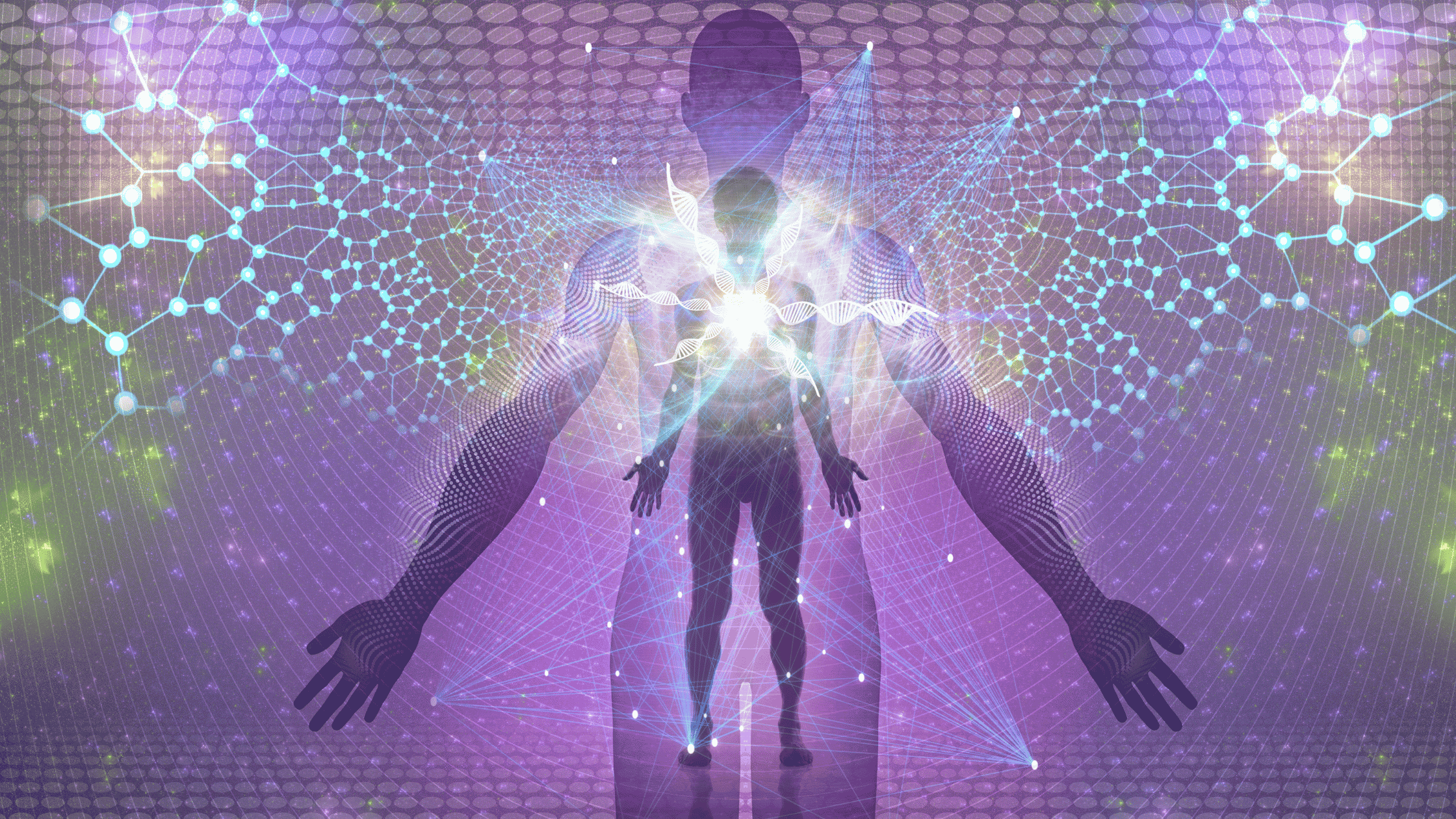
The biofield gave researchers a name for something practitioners have worked with for centuries: the idea that the body runs on more than biochemistry alone.
Biofield vs. Bioenergetics: Are They the Same Thing?
If “biofield” and “bioenergetics” sound like two different things, let’s clear that up.
They’re describing the same underlying concept, just from two different angles. Biofield is the term researchers use in the scientific literature, the one the NIH formally coined in 1992. Bioenergetics and bioenergetic fields describe that same energy field in the language most people actually use, especially in practitioner and testing settings.
Worth noting: “bioenergetics” also shows up elsewhere with different meanings entirely, and is not to be confused with bioenergetic analysis in psychotherapy. In the context of this article and CBH’s testing, bioenergetics refers specifically to the biofield.
When we talk about your bioenergetic field at CBH, we’re talking about the same field researchers call the biofield. Bioenergetics testing, including the Full Bioenergetic Scan, is the applied side of that same concept: reading the field for real, actionable information rather than studying it in a lab.
The Human Biofield: Fields Your Body Is Already Generating
Here’s something that might surprise you: you’ve already encountered biofield science in a clinical setting, even if no one called it that.
Electrocardiograms measure the electrical field generated by your heart.
Electroencephalograms measure the electrical field generated by your brain.
Both are, in effect, textbook examples of the human biofield: spatially distributed electromagnetic fields your body continuously produces that carry real physiological information. 3
Researchers describe biofield physiology as encompassing the electromagnetic, biophotonic, and other spatially distributed fields that living systems generate and respond to as integral parts of cellular, tissue, and whole-organism self-regulation.
You can see this at the cellular level in a few specific ways: the electrical charge sitting across a cell’s membrane helps guide how tissue develops and repairs itself. Small electrical currents across skin and tissue surfaces help kick off the body’s healing response after an injury. And these same kinds of electrical patterns are now known to help direct things like organ placement and regeneration during development.
This is the piece I find myself explaining most often: when we talk about something being energetically high or low, or bioenergetically resonating with a stressor, we’re describing shifts within this same regulatory field that scientists are now working to formally measure.
Biophotons: The Measurable Piece of the Puzzle
One of the most concrete threads of biofield research involves biophotons, also called ultraweak photon emission. Every living cell releases an extremely faint stream of light as a byproduct of normal metabolic activity, thousands of times too dim for the naked eye to register. Researchers using cryogenic, ultra-sensitive cameras have imaged this light coming off the human body and found that it follows a diurnal rhythm, rising through the day and peaking in the late afternoon before dropping off overnight, tracking closely with the body’s circadian and metabolic cycles. 4
Fluctuations in this light have also been shown to correlate with cerebral blood flow and brain activity.3
Researchers are candid that standardized methods are still needed before biophoton imaging becomes a mainstream diagnostic tool, and that’s a fair caveat to sit with.
It’s still a clear example of the biofield moving from concept to something researchers can point a camera at.
Why Scientists Are Studying It Now
Scientists are studying the biofield because it may explain how the body regulates itself beyond biochemistry and because it has measurable, instrumentable components that could eventually be used for both diagnosis and therapy.
The research sits at the intersection of biophysics, integrative medicine, and psychoneuroimmunology. A 2015 paper in Global Advances in Health and Medicine describes the biofield as “an organizing principle for the dynamic information flow that regulates biological function and homeostasis,” one that may influence biological pathways from the subatomic to the cellular level. 5
The current interest is as translational as it is theoretical: researchers want to understand how the biofield could eventually be used both diagnostically and therapeutically.
What Does the Research Actually Show?
I think honesty about where the science stands builds more trust than overselling it would.
A 2025 scoping review published in the Journal of Integrative and Complementary Medicine systematically searched major databases and identified 353 peer-reviewed studies on biofield therapies involving human participants. Nearly half (172 studies) reported positive results in favor of biofield therapy for the outcomes being investigated, while the rest reported mixed, nonsignificant, or, in a small number of cases, negative results. The modalities studied ranged from reiki and therapeutic touch to healing touch, external qigong, and distant healing.6
An earlier best-evidence synthesis of 66 clinical studies found strong evidence that biofield therapies reduce pain intensity in pain populations, with moderate evidence for reducing pain in hospitalized and cancer patients, decreasing negative behavioral symptoms in dementia, and decreasing anxiety in hospitalized populations. 2
On the more experimental end, a 2024 case study published in Scientific Reports by researchers at MD Anderson Cancer Center followed a single biofield therapy practitioner across 60 double-blind treatment and control sessions with live pancreatic cancer cells, and found measurable shifts in the practitioner’s EEG readings alongside changes in cellular calcium uptake between treatment and control conditions.7
It’s one practitioner and one study, worth reading as an early, tightly controlled proof of concept rather than a population-level result.
The mechanisms behind these findings remain genuinely unknown, and the 2025 scoping review points to inconsistent reporting and methodological challenges as real limits on what can be concluded so far. This is a field in active development, with a substantial and growing body of peer-reviewed evidence that biofield therapies produce measurable effects, while the underlying how is still being worked out.
Ancient Knowing, Modern Science
The biofield concept has ancient roots across multiple cultures. Traditional Chinese medicine calls it qi, Ayurveda calls it prana, Japanese medicine calls it ki. Modern science gave these traditions a shared, measurable term in 1992.
What’s notable is that the NIH committee that coined “biofield” was specifically looking for a term generic enough to hold these differing traditions while remaining scientifically usable. The concept wasn’t new; the scientific vocabulary for it was.
Biofield Healing and Bioenergetic Fields
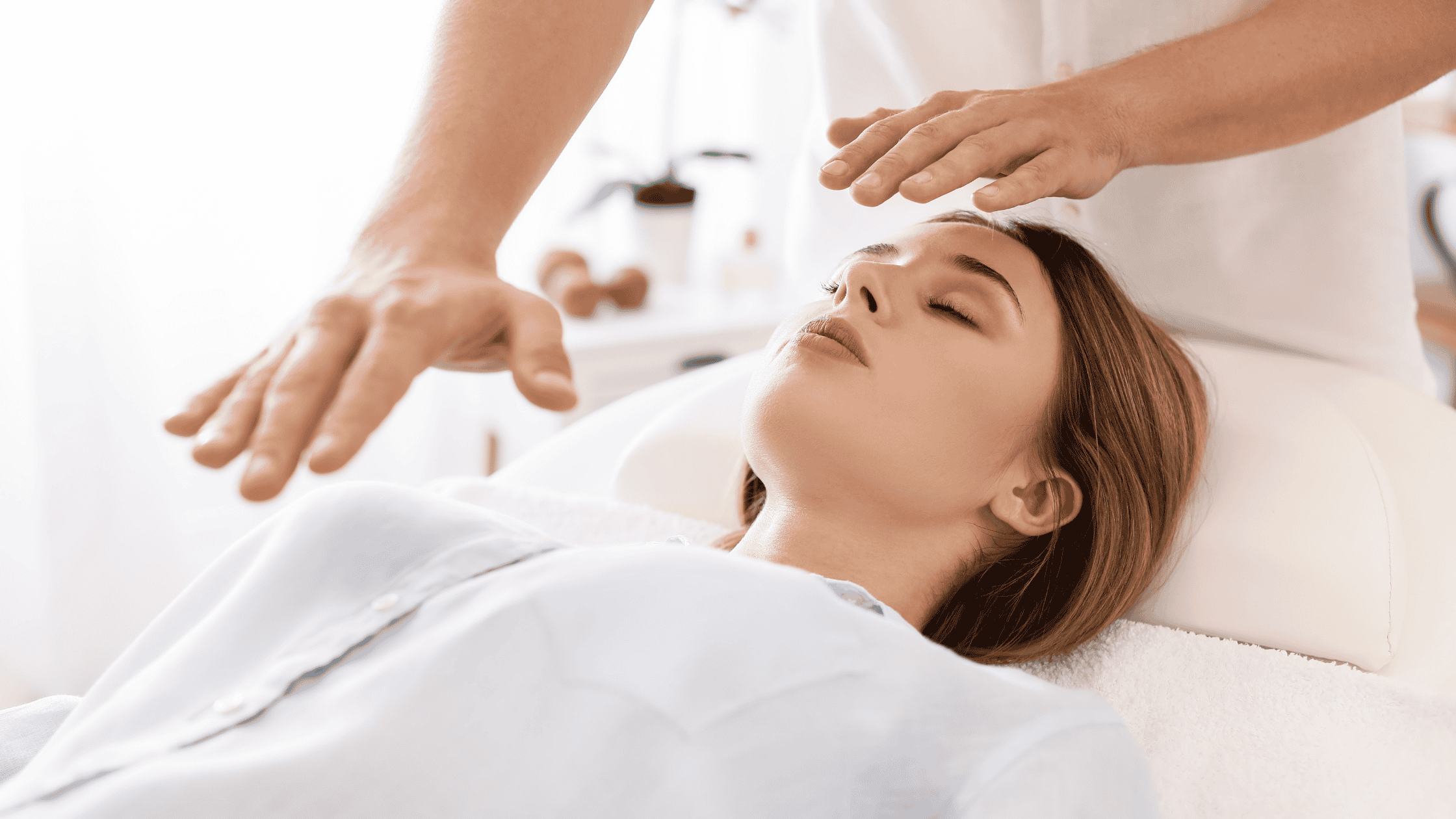
Biofield healing is the umbrella term for practices that work directly with this field, including Reiki, therapeutic touch, qigong, and other bioenergetic therapies.
Researchers define these as noninvasive, practitioner-assisted approaches that engage the biofield of both the practitioner and the person receiving care.
This is also the lineage that CBH Energetics testing grows out of: the idea that bioenergetic fields carry real, readable information about what’s happening in the body, long before it shows up on a standard lab panel.
I didn’t come to this work as a theory. I got sick at 25, and for the next four years, every conventional test I took came back normal: regular bloodwork, X-rays, stool studies, MRIs, a colonoscopy, all of it.
Meanwhile, I was crawling to the bathroom, and doctor after doctor told me it was in my head. It wasn’t until I sat down with a practitioner using an energetic testing method that things changed. In the first ten minutes of that appointment, he told me I was resonating with Borrelia, the organism behind Lyme disease. Traditional testing had missed it for four years, despite countless Western blot tests.
That gap, between what my body was actually dealing with and what a standard panel could see, is the reason I believe in this work, and the reason I built CBH around it.
This is the gap that our scans were built to close. Instead of waiting for a nutrient depletion or hormone shift to become severe enough to flag on bloodwork, the Full Bioenergetic Scan, for example, reads across 14 body systems to identify where things are bioenergetically resonating with imbalance right now, giving you a bioresonance reading of your body’s own signal regardless of what your labs are showing.
❓ Frequently Asked Questions About The Biofield
Is biofield science actually real, or is it pseudoscience?
Biofield science is a recognized, peer-reviewed research discipline, formally cataloged by the National Library of Medicine since the 1990s and funded through NIH-affiliated research centers. It remains an emerging field with genuine open questions about mechanism, and researchers are candid about where evidence is still limited, but it is studied at accredited institutions and published in indexed journals. For a closer look specifically at bioenergetic testing’s evidence base, see Is Bioenergetic Testing Real? Science & Limitations.
What is the difference between the biofield and an aura?
“Aura” is a term rooted in spiritual and metaphysical traditions describing a perceptible energy layer around the body. “Biofield” is the formal scientific term, introduced by the NIH, for the measurable and theorized energy field that regulates biological function. The two concepts overlap, but the biofield is the version researchers study with instruments like EEG and biophoton cameras.
Can the human biofield actually be measured?
Parts of it can. Researchers already measure the heart’s and brain’s electrical fields through EKG and EEG, and newer tools have imaged the faint biophoton light every cell emits, tracking how it shifts with oxidative stress, disease, and time of day. Measuring the biofield as a unified whole is still an active research goal rather than a finished science. If you’re curious how at-home options compare, Best At-Home Health Test Kits in 2026 breaks down the landscape.
What is biofield healing?
Biofield healing refers to noninvasive, practitioner-assisted therapies, like reiki, therapeutic touch, and qigong, that work directly with a person’s biofield to support the body’s own regulatory processes. Bioenergetic and bioresonance testing, including the Full Bioenergetic Scan, is built on this same foundational concept: reading the bioenergetic field for information about imbalances in the body.
Curious what your own biofield is telling you?
The Full Bioenergetic Scan reads across 14 body systems and tests for 2500+ data points, including hormones, nutrients, sensitivities, and toxins, to show you where your body is out of balance.
Research Links:
- Rubik B, Muehsam D, Hammerschlag R, Jain S. Biofield Science and Healing: History, Terminology, and Concepts. Global Advances in Health and Medicine. 2015;4(Suppl):8-14. https://pmc.ncbi.nlm.nih.gov/articles/PMC4654789
- Jain S, Mills PJ. Biofield therapies: helpful or full of hype? A best evidence synthesis. International Journal of Behavioral Medicine. 2010;17(1):1-16. https://www.ncbi.nlm.nih.gov/books/NBK78781/
- Hammerschlag R, Levin M, McCraty R, et al. Biofield Physiology: A Framework for an Emerging Discipline. Global Advances in Health and Medicine. 2015;4(Suppl):35-41. https://pubmed.ncbi.nlm.nih.gov/26665040/
- Kobayashi M, Kikuchi D, Okawa H. Imaging of Ultraweak Spontaneous Photon Emission from Human Body Displaying Diurnal Rhythm. PLOS ONE. 2009. https://pmc.ncbi.nlm.nih.gov/articles/PMC2707605/
- Kafatos MC, Chevalier G, Chopra D, et al. Biofield Science: Current Physics Perspectives. Global Advances in Health and Medicine. 2015;4(Suppl):25-34. https://pmc.ncbi.nlm.nih.gov/articles/PMC4654779/
- Sprengel ML, Teo L, Allen S, Ijssennagger N, Hammerschlag R, Dyer NL, Crawford C. Biofield Therapies Clinical Research Landscape: A Scoping Review and Interactive Evidence Map. Journal of Integrative and Complementary Medicine. 2025;31(5):406-430https://journals.sagepub.com/doi/full/10.1089/jicm.2024.0773
- Cohen L, Delorme A, Cusimano A, Chakraborty S, Nguyen P, Deng D, Iqbal S, Nelson M, Wei D, Fields C, Yang P. Examining the effects of biofield therapy through simultaneous assessment of electrophysiological and cellular outcomes. Scientific Reports. 2024;14:29221. https://www.nature.com/articles/s41598-024-79617-3
DISCLAIMER: Balanced Health, LLC/CBH Energetics and any parent, subsidiary, affiliated, or related entities and companies do not provide medical advice or services. This post and the bioenergetic products and services offered by Balanced Health, LLC/CBH Energetics including, but not limited to, bioenergetic tests, bioenergetic scans, bioenergetic reports and related products and services (collectively the “Bioenergetic Products and Services”) are designed for educational and informational purposes only and are not intended to diagnose, treat, cure, or prevent any disease, condition, complaint, illness or medical condition and are not a substitute for professional services or medical advice. Testing is not used for the purpose of obtaining information for the diagnosis, prevention, or treatment of disease or the assessment of a health condition or for identification purposes.
