Have you ever noticed that some foods make you feel grounded and calm, while others leave you restless or sluggish? In Traditional Chinese Medicine (TCM), this isn’t just a coincidence; it’s the essence of food energetics.
Most of us focus on calories, macronutrients, and food sensitivities from a Western nutrition perspective. But food has an energetic quality, too. It can warm or cool, ground, stimulate, moisten, or dry. TCM looks at how food feels and functions energetically in the body. Interpreting the sensitivities on your bioenergetic scans through this lens can make all the difference in how you feel.
Every food has a “temperature” and “action,” influencing how energy (Qi) moves, how fluids circulate, and how well your organs perform their roles. Understanding food energetics helps you eat not just for nourishment, but also for overall balance —the key to health and vitality in Chinese medicine.
To do this, it’s helpful to understand the philosophy of Yin and Yang, two complementary forces that guide how energy flows in the body. While they’re meant to coexist in harmony, life, stress, and environment can easily throw them off balance. Following your personal food energetics is one way to move back toward balance.
The Yin and Yang of Food: Warm vs. Cool Food Energetics
In TCM, balance is about harmonizing Yin (cool, moist, receptive) and Yang (warm, active, expansive) energies. Foods are categorized by how they affect body temperature and internal processes—not the temperature on your plate.
Signs of Too Much Heat (Yang Excess)
You may notice:
- Feeling hot or flushed easily
- Irritability or restlessness
- Red eyes or complexion
- Constipation or dry stools
- Inflammation, acne, or mouth ulcers
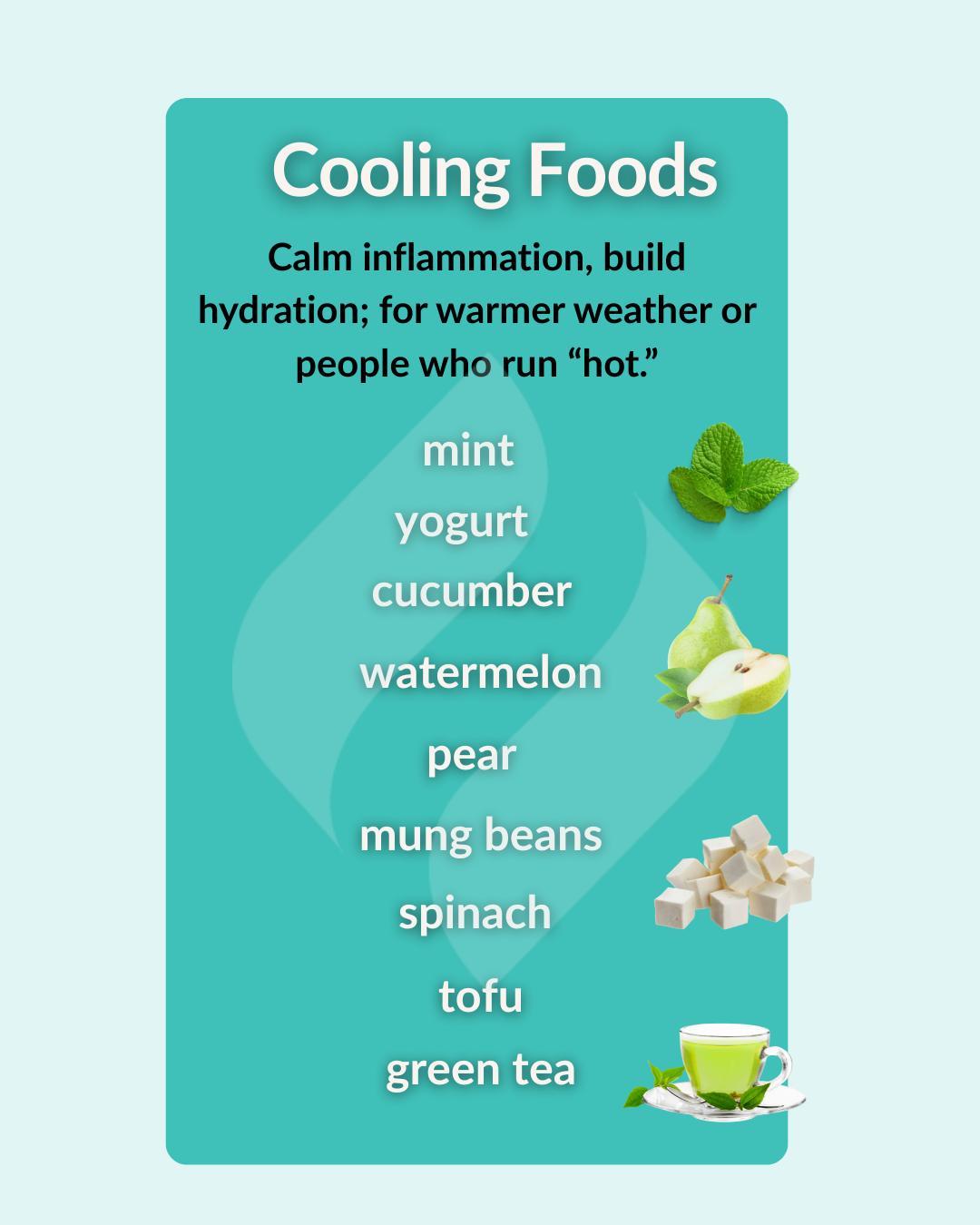
Cooling foods can help bring balance by soothing and dispersing heat.
Signs of Too Much Cold (Yin Excess)
You may notice:
- Cold hands and feet
- Fatigue or sluggish digestion
- Bloating or loose stools
- Pale complexion or low appetite
- Craving warmth
Warming foods help restore circulation and digestive fire (known as Spleen Qi).
Sometimes, you can even feel it right away; that cold smoothie in winter may leave you feeling sluggish, while a bowl of hot soup feels instantly comforting.

The Damp and Dry Balance
In addition to temperature, foods can also be damp, drying, or neutral. This refers to how they influence moisture and fluid balance in the body.
Signs of Dampness
- Feeling heavy or foggy-headed
- Water retention or bloating
- Sticky stools or mucus
- Fatigue after eating
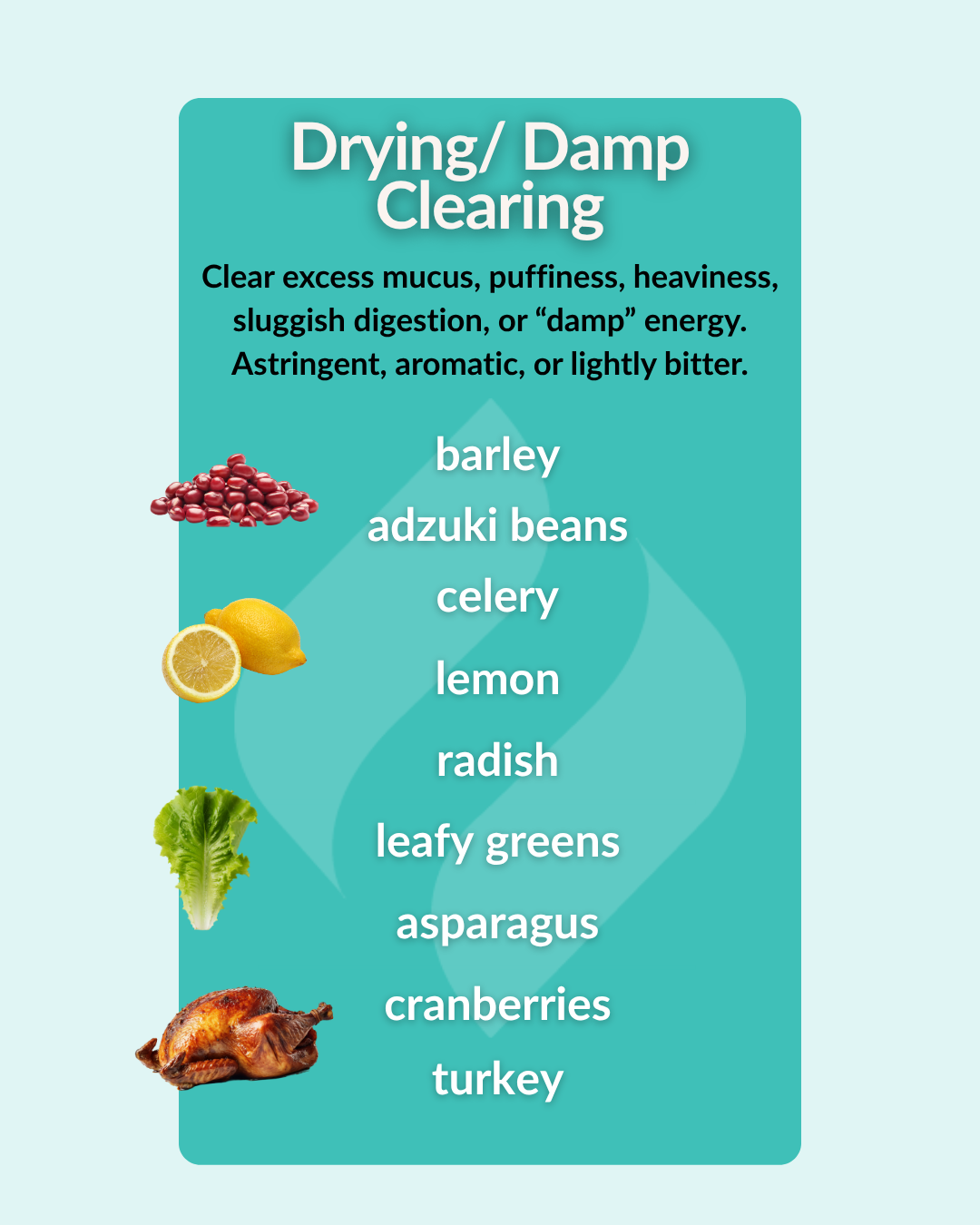
To clear dampness, focus on drying and light foods and avoid excess sugar, dairy, and greasy meals.
Signs of Dryness
- Dry skin, lips, or throat
- Constipation
- Cough or dry mouth
- Feeling overheated but not sweating
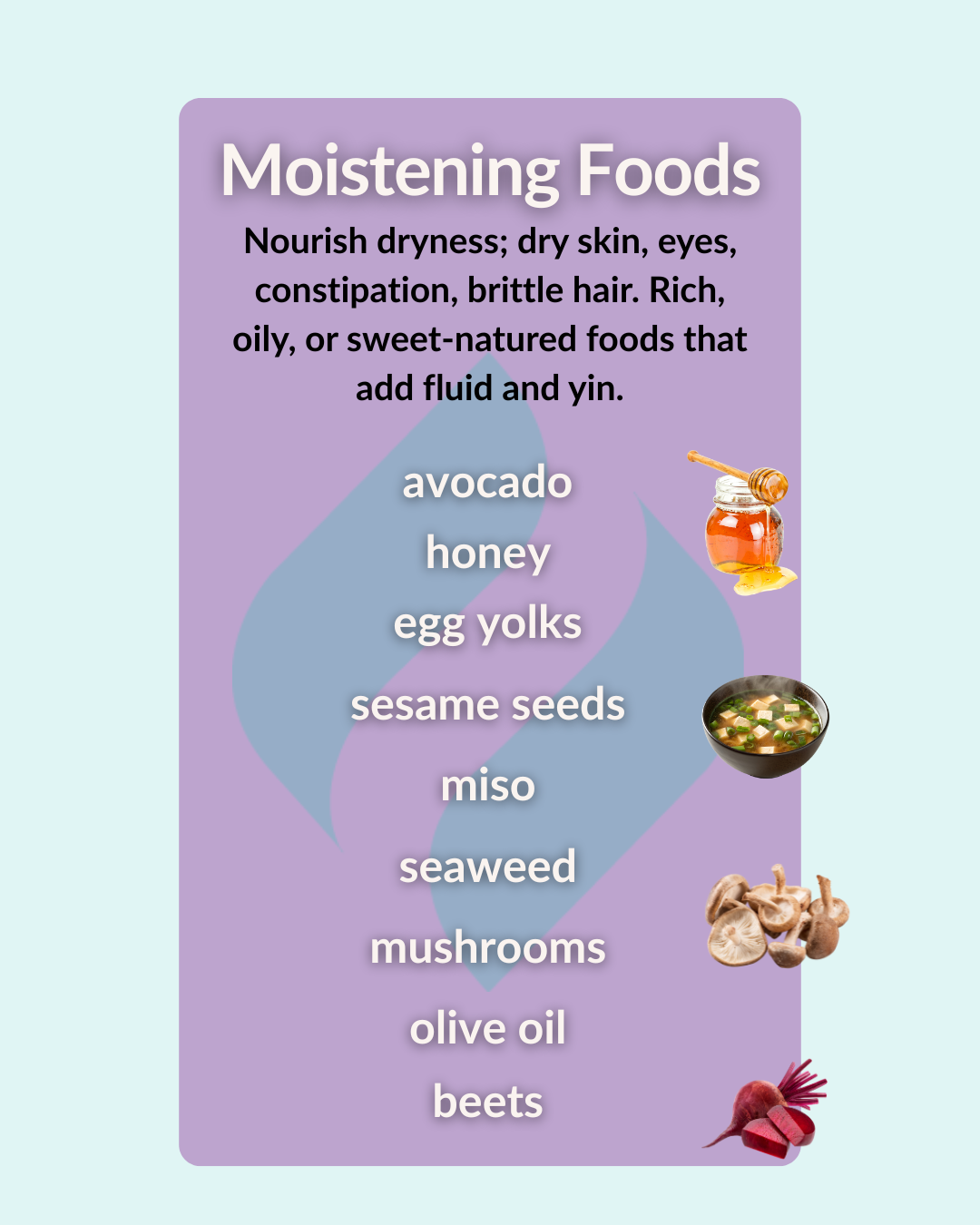
To moisten and nourish Yin, emphasize moistening foods.
Ayurveda and Food Energetics
The idea that food affects your inner balance isn’t unique to Chinese medicine. Ayurveda, India’s ancient healing system, shares a similar philosophy.
In Ayurveda, every food has:
- Rasa (taste) — sweet, sour, salty, bitter, pungent, or astringent
- Virya (energy) — heating or cooling in nature
- Vipaka (post-digestive effect) — how the food influences the body after digestion
These qualities influence the three doshas: Vata, Pitta, and Kapha, the body’s governing energies. For example, cooling foods like cucumber or coconut help balance fiery Pitta, while warming spices like ginger or cardamom support sluggish digestion linked to Kapha.
Both TCM and Ayurveda view food as energetic guidance, not just nourishment. And both systems encourage self-awareness: noticing how food feels in your body and eating in alignment with what brings balance.
Putting It All Together
There’s no one-size-fits-all diet in food energetics — balance is personal and seasonal. Bioenergetic testing can reveal your body’s current energetic relationship with food, helping you make choices that align with your own rhythm.
- In winter, lean toward warming, nourishing foods.
- In summer, focus on cooling, hydrating foods.
- If you tend to feel heavy or sluggish, lighten up your meals.
- If you’re often cold or fatigued, add warmth and spice.
Food energetics invites you to tune in to notice how your body responds after you eat, and to use that awareness to guide your choices.
Balanced Eating Through Bioenergetic Testing
When you eat in harmony with your body’s needs, you support your energy, digestion, and emotions all at once. Food becomes medicine not because it’s perfect on paper, but because it aligns with you.
If you’ve been struggling to find balance physically, emotionally, or energetically, our Dietary Scan can complement this wisdom by identifying your personal food energetics that influence your digestion, moods, hormones, and overall vitality.

DISCLAIMER: Balanced Health, LLC/CBH Energetics and any parent, subsidiary, affiliated, or related entities and companies do not provide medical advice or services. This post and the bioenergetic products and services offered by Balanced Health, LLC/CBH Energetics including, but not limited to, bioenergetic tests, bioenergetic scans, bioenergetic reports and related products and services (collectively the “Bioenergetic Products and Services”) are designed for educational and informational purposes only and are not intended to diagnose, treat, cure, or prevent any disease, condition, complaint, illness or medical condition and are not a substitute for professional services or medical advice. Testing is not used for the purpose of obtaining information for the diagnosis, prevention, or treatment of disease or the assessment of a health condition or for identification purposes.
