Can Chocolate Get Moldy?
Yes, chocolate can develop mold under certain conditions, though it’s less common than other foods like bread, cheese, or milk.
This guide explains what mold on chocolate actually looks like, how it differs from harmless chocolate bloom, whether moldy chocolate is safe to eat, and why chocolate sometimes shows up as a sensitivity on bioenergetic scans. Whether you’re managing mold illness, supporting clients through detox, or simply want to know if that white coating is dangerous, this article covers what you need to know.
Why Chocolate Resists Mold:
– Low moisture content: Most chocolate contains less than 3% water; mold needs 15%+ to thrive
– High sugar and fat content: Creates an inhospitable environment for fungal growth
– Antimicrobial compounds: Dark chocolate contains natural polyphenols that inhibit mold
Types Most Susceptible:
– Milk chocolate (higher moisture from dairy)
– Chocolate with nuts, dried fruit, or fillings (caramel, nougat, cream)
– Artisanal or homemade chocolate (may lack preservatives)
– Improperly stored chocolate (warm, humid environments)
Dark chocolate (70%+ cocoa) is least likely to develop visible mold, though it can still carry mycotoxins from the fermentation and processing stages (more on this below).
Most articles about “mold on chocolate” focus on the white bloom that can form from temperature changes. That bloom isn’t mold — it’s cocoa butter separating from the other ingredients, or moisture causing tiny sugar crystals to form. But when it comes to mold spores and mycotoxins, there’s more to the story.
The moldiness of chocolate can boil down to the fermentation process used to develop its flavor. While this process is essential for taste, it can sometimes introduce fungal compounds that linger through production — especially if beans aren’t stored or dried properly.
This doesn’t mean all chocolate is harmful. In fact, it’s rich in magnesium, antioxidants, and mood-boosting compounds that make it a favorite comfort food for many. But for people dealing with mold illness, environmental sensitivities, or detox challenges, even trace exposure can trigger symptoms.
Whether you’re supporting clients through mold recovery or managing your own sensitivities, it’s worth understanding how chocolate fits into the picture — and how to check if it’s adding to your body’s toxic load.
What Does Mold on Chocolate Look Like?
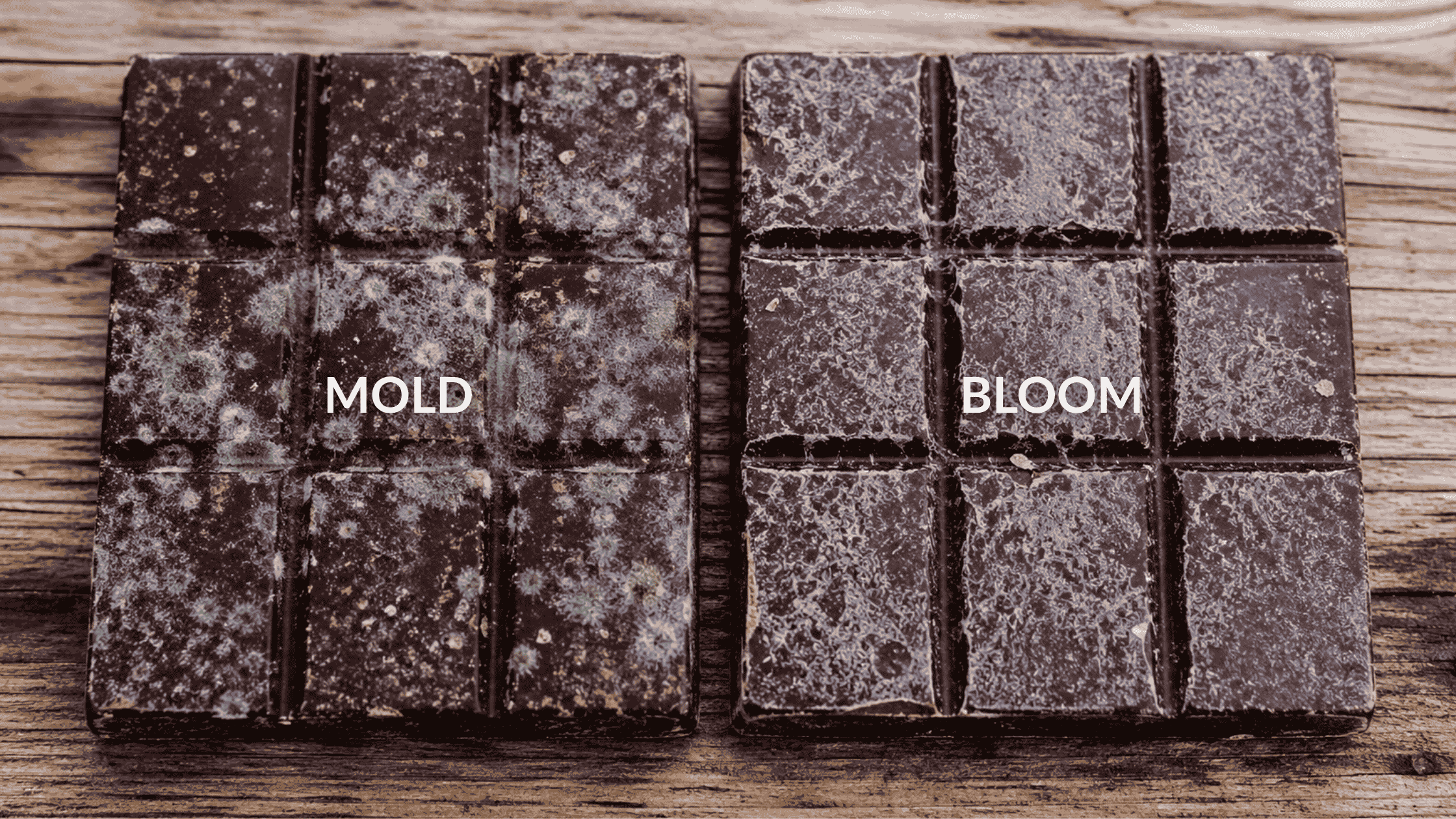
Moldy chocolate has distinct characteristics that differ from chocolate bloom:
Visual Signs of Mold:
– Green or blue-green fuzzy patches are the most common mold appearance
– White fuzzy growth with a cotton-like texture (different from smooth bloom)
– Black or gray spots that look raised or irregular
– Pink or orange discoloration indicates yeast or bacterial contamination
Is the White “Bloom” on Chocolate the Same as Mold?
No — and this is a key education point.
Many articles focus on the white or speckled surface of chocolate. That effect is called chocolate bloom — not a sign of mold. The Canadian Food Inspection Agency explains that the hazy white coating is caused by temperature swings or moisture, not fungal growth, and is harmless. (1) So: bloom ≠ mold. That means you can avoid false assumptions — “it looks moldy, so I must discard it” — when in fact the treat is safe from the bloom standpoint.
| Feature | Chocolate Bloom ✅ | Chocolate Mold ❌ |
|---|---|---|
| Appearance | White/gray smooth film | Fuzzy green, blue, or white patches |
| Texture | Powdery, crystalline | Fuzzy, raised, hairy |
| Smell | Normal chocolate scent | Musty, sour, or off odor |
| Cause | Temperature changes, moisture | Fungal growth |
| Safe to eat? | Yes – completely harmless | No – discard immediately |
| Taste | May be grainy but edible | Bitter, sour, spoiled |
| Location | Surface only | Can penetrate chocolate |

Is Moldy Chocolate Safe to Eat?
No, chocolate with visible mold isn’t something you want to eat.
Even though chocolate feels solid, it doesn’t behave like a hard cheese, where you can just cut around a bad spot and move on. When mold shows up on chocolate, what you’re seeing on the surface is only part of the story. The underlying structure can allow it to spread more deeply than it looks, which means the rest of the bar may already be affected.
What Happens When You Eat Moldy Chocolate?
There’s also the question of what that mold is producing. Certain types can create compounds called mycotoxins. These don’t always cause immediate or dramatic reactions, but they can irritate the digestive system or lead to things like nausea, cramping, or headaches. For some people, especially those who are more sensitive, it can also trigger allergic-type responses.
And this is where people often try to salvage it… scraping it off or snapping that square away. But with chocolate, that doesn’t really solve the problem. What you can’t see matters just as much as what you can.
If you’ve already eaten a small amount, it’s usually not a situation that turns into anything serious. But it’s still worth paying attention to how you feel over the next day or so. Staying hydrated, rinsing your mouth, and simply giving your body a bit of space to process is often enough.
If something feels off—like persistent stomach discomfort, nausea that doesn’t pass, or any kind of stronger reaction—it’s a good idea to check in with a healthcare provider. And if you’re dealing with a more sensitive situation, like pregnancy or a weakened immune system, it makes sense to be a bit more cautious.
At the end of the day, if chocolate shows visible mold, it’s one of those “not worth the risk” moments.
So does this mean you should avoid chocolate altogether? Not necessarily — but context matters.
Why Does Moldy Chocolate Contain Mycotoxins?
You may see chocolate flagged on a bioenergetic test as a food or toxin sensitivity. Understanding how mold in chocolate can occur helps you in assessing risk. Processing and storage risks:
The raw material for chocolate comes from cocoa beans, which must be: harvested → fermented → dried → roasted → processed into the chocolate we consume. During those early steps (fermentation, drying, storage), filamentous fungi may colonize beans, and some can produce mycotoxins such as ochratoxin A or aflatoxins.
A 2024 study on Brazilian artisanal chocolates found that ochratoxin A (OTA) was detected in 30% of cocoa bean samples, with concentrations ranging from <0.04 to 1.18 µg/kg, and 23% of bean-to-bar chocolates tested positive for OTA (2) (3). Despite representing a growing market segment, artisanal and bean-to-bar chocolates showed a higher prevalence of OTA in semi-sweet and dark chocolates with cocoa content above 50%.
Research from Ghana (2023-2025) revealed that 21.7% of commercial cocoa beans were contaminated with OTA, with the Western regions showing the highest occurrence at 32.5% (4). The study emphasized the need for good agricultural practices (GAPs) and careful monitoring throughout the cocoa value chain.
A retail survey in Canada found that none of the chocolate or cocoa powder samples tested contained detectable aflatoxins in that specific survey period. However, that doesn’t mean the risk is zero. (5) For example, a 2014 review noted: “chocolate appears to be a minor source of ochratoxin A and aflatoxins … although the fact that products containing chocolate are widely consumed by children is a concern.” (6)
Therefore, the risk is low but non-negligible, and may be higher for individuals with mold sensitivity or impaired detoxification.
What Kinds of Molds or Mycotoxins Are We Talking About?
When we talk about moldy chocolate, the key harmful agents are not the white bloom you see on the surface (see next section) but rather potential mycotoxins produced by fungi during cocoa processing and storage.
-
Aspergillus species: common in grains, nuts, coffee, and cocoa beans.
-
Penicillium species: also found in foods (cheese, nuts, legumes) and under damp conditions.
These fungi may grow and, under certain conditions, produce mycotoxins. The review on cocoa processing highlights that both aflatoxins and ochratoxin A may occur under poor handling/storage. For the clients you work with (mold illness, detox issues), even trace exposure might be significant — because their system is already sensitized.
Quality of the chocolate matters
High-quality, well-handled cocoa beans (proper fermentation, drying, storage) reduce the likelihood of mycotoxin contamination. The more processed, low-cocoa, high-added-sugar bars may carry more risk. Also, local or artisanal products with less rigorous controls showed higher contamination in one 2017 study.
Insights from Practice: Mycotoxins in Chocolate and What We See on Testing
One of the most consistent patterns we see in practice is the association between mycotoxins in chocolate and chocolate-sensitivity symptoms. On Full Bioenergetic Body Scans, it is very common to see mycotoxins resonate alongside sensitivities to chocolate. This combination is a strong indicator that the body may already be dealing with mold-related stress.
This is not just about a food sensitivity. Chocolate often becomes a signal rather than the root issue. We frequently see mycotoxins resonate in ways that correlate with congestion in detox pathways, which play a central role in processing environmental toxins. When these pathways are overwhelmed, even small exposures, including foods like chocolate, can trigger noticeable symptoms.
What makes this even more important is that we also see mycotoxins resonate consistently on our bioenergetic Brain Scans.
This aligns with what many clients report. Mycotoxins can impact brain health by influencing inflammation, oxidative stress, and neurotransmitter balance. In practice, this often presents as:
- Brain fog that does not resolve easily
- Mood instability or increased reactivity
- Difficulty focusing and sleeping
- A general sense of feeling “off” neurologically
When chocolate sensitivity symptoms and mycotoxin patterns show up together, it often points to a deeper layer of imbalance. Another key insight is that mycotoxins can accumulate over time. If the body is not effectively clearing them, ongoing low-level exposure from food sources, including chocolate, can continue to add to the overall burden. This is why we focus on patterns, not just isolated triggers.
When someone reacts to chocolate, especially in combination with mold or environmental sensitivities, it is often worth looking at the bigger picture of mycotoxin load and overall detox capacity.
One client in particular experienced a complete shift after identifying mycotoxins as a key stressor through bioenergetic testing with CBH Energetics. She had been dealing with persistent brain fog, swelling, and skin issues. Nothing fully explained why her symptoms kept cycling.
Through her bioenergetic test, we saw a strong resonance with mycotoxins, along with patterns tied to detox congestion. This helped connect what had previously felt like unrelated symptoms. Once she began supporting her body based on those findings, her clarity improved, her skin cleared, and she finally felt like she was moving forward instead of guessing.
You can hear her full story here:
If you’re simply trying to avoid ever dealing with moldy chocolate in the first place, how you store it matters more than most people think.
Storing Your Chocolate
How to Prevent Moldy Chocolate
Follow these storage guidelines to keep chocolate mold-free:
Temperature:
– Store at 60-70°F (15-21°C)
– Avoid refrigerator unless necessary (causes bloom)
– If refrigerating: wrap tightly in plastic wrap + airtight container
– Let refrigerated chocolate come to room temp before opening (prevents condensation)
Location:
– Cool, dry, dark place (pantry or cupboard)
– Away from strong odors (chocolate absorbs smells)
– Not near stove, oven, or heat sources
– Not in basement or garage (too humid)
Packaging:
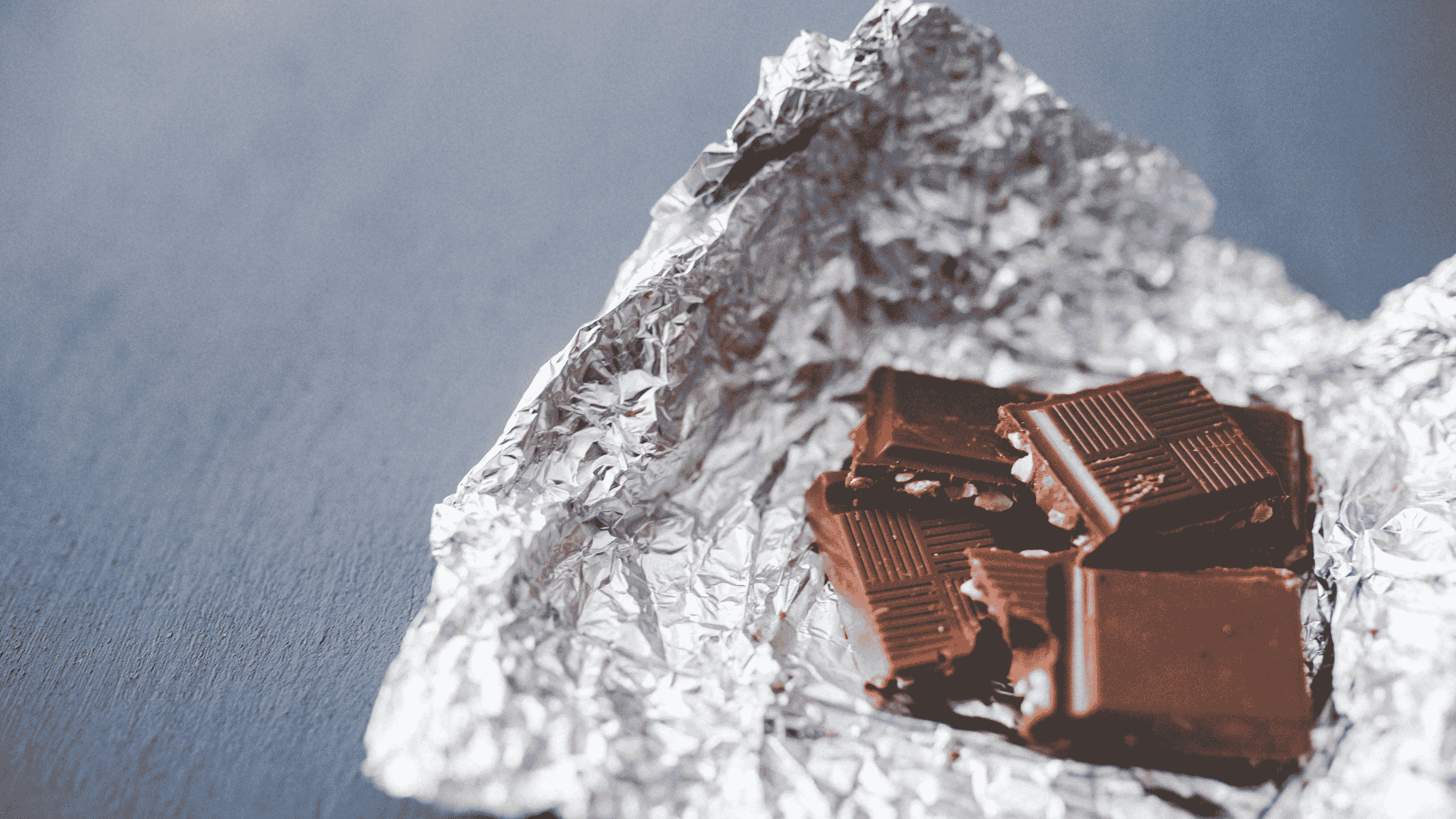
– Keep in original wrapper when possible
– Use airtight containers after opening
– Add silica gel packets to container for moisture control
– Vacuum-seal for long-term storage
Shelf Life:
– Dark chocolate: 2 years unopened, 1 year opened
– Milk chocolate: 1 year unopened, 6-8 months opened
– Chocolate with nuts/fillings: 6-9 months
– Homemade chocolate: 2-3 weeks refrigerated
Signs Your Chocolate Has Gone Bad:
– Visible mold (any color)
– Sour, musty, or rancid smell
– Significant color changes
– Brittle or crumbly texture (beyond normal aging)
– Unusual taste (bitter, sour, chemical)
Should You Avoid Eating Chocolate?
Short answer: Not necessarily — but it depends on the individual and context.
- If you are actively treating mold toxicity or have significant sensitivity, it may make sense to pause chocolate (especially lower-quality) until digestion and detox pathways are supported.
- Ensure your gut, liver, and microbiome are in good shape (so you handle exposures well).
- When you re-introduce chocolate: choose a higher-cocoa dark chocolate, minimal additives, proper storage (cool, dry), and observe your reaction (note timing, symptoms).
- For clients: track consumption + symptoms (time of day, how they feel afterward) to identify patterns. Our Wellness Activator includes a food & mood tracking sheet to make this easy! Your access is free with any scan purchased!
- Understand that the white bloom isn’t a mold trigger—but that doesn’t mean all risks are gone.
Support Around Moldy Chocolate & Sensitivity
- Prioritize gut and liver support: Healthy hydrochloric acid, microbiome, bile flow, and phase I/II detox capacity make a big difference.
- Use bioenergetic testing to evaluate overall toxin load, nutrient imbalances, and organ stress.
- Choose quality: Choose chocolate with a higher cocoa % (70 %+), minimal sugar, from reputable sourcing.
- Storage & handling: Store chocolate in a cool (ideally < 20 °C), dry, stable environment. Bloom reduces palatability, though not safety.
- Monitor reaction patterns: if you struggle with mold toxicity or histamine issues, even low-level exposures matter. Ask: What time did you eat it? What symptoms followed?
- Re-introduce mindfully: After foundational support, you might pilot a small piece and observe.
The Nutritional Benefits of Chocolate
Whether you’re concerned about moldy chocolate or not, chocolate still may be a better snack choice than many other sweet treats. Why? Dark chocolate (when free of visible mold or spoilage) is rich in minerals and vitamins — such as magnesium, iron, and copper — that support body systems like the Endocrine System, or overall cellular health. These nutrients often show up as imbalanced on scans like the Full Scan, Balancing Scan, and even in the Awareness Scan.
- Magnesium—responsible for balancing excitatory and inhibitory signals in the Nervous System
- Iron—key for oxygen transport, brain function, and energy production.
- Copper—creates red blood cells and helps iron absorption
Including a variety of foods, supporting healthy digestion for absorption, and focusing on cellular support are smart strategies — and yes, that might include enjoying a bit of dark chocolate in moderation.
More tooth-friendly than sticky candy
Chocolate that isn’t sticky (unlike dried fruit or many sticky candies) presents a lower cavity risk. Choosing darker chocolate (which typically has less sugar) over milk chocolate is a smart tactic for both dental and general wellness.
Brain and mood support
Dark chocolate also provides:
- Some B-vitamins (helpful for brain health and energy, especially when clients are stressed or under metabolic strain
- Manganese—metabolism of fat, carbohydrates, and amino acids. Antioxidant properties and bone health
- Flavanols and antioxidants—important to reduce free radicals and protect body systems like your skin
- Phenylethylamine (PEA), a compound that may help attention and lift mood, though research is limited
- Flavonoids and a small amount of caffeine (dark chocolate ~12 mg caffeine per ounce), which may enhance focus, though caffeine sensitivity is a consideration
What Moldy Chocolate Teaches Us About the Bigger Picture of Mold Illness
At first glance, moldy chocolate feels like a contradiction — comfort food with a hidden downside. But for those navigating mold illness or environmental sensitivities, even small exposures can matter. Chocolate becomes less about the food itself, and more about what your body is already dealing with
While most commercially produced chocolate is safe for the general population, individuals dealing with mold toxicity, chronic fatigue, or detox challenges often have a body that’s more reactive. When the liver, gut, or immune system is already burdened, even trace mycotoxins can add stress to an overloaded system.
That doesn’t mean chocolate must be off-limits forever. Instead, it’s a reminder to:
-
Be mindful of quality and sourcing. Choose darker, well-fermented chocolate from reputable brands that test for mycotoxins.
-
Support your body’s detox pathways: When digestion, bile flow, and liver function are strong, your system can handle occasional exposures far better.
-
Listen to your body. If chocolate causes headaches, fatigue, or brain fog, it may not be the treat itself — but what your body is already processing.
Ultimately, “moldy chocolate” is less about the chocolate and more about how resilient your system is. By testing, tracking, and supporting your internal balance, you gain the clarity to enjoy foods again — with confidence instead of fear.
If you or your clients are navigating mold toxicity, consider using our Maintenance Package to check for lingering toxin stress, nutrient depletion, or organ imbalance. It’s a gentle, non-invasive way to see whether your body’s ready to bring back your favorite indulgences — like that square of dark chocolate.

About the Author: Samantha Stupak
Samantha Stupak is the Founder of CBH Energetics with over 12 years of experience and more than 50,000 bioenergetic scans analyzed worldwide. Her work focuses on identifying patterns of imbalance across systems and helping clients and practitioners understand the deeper connections driving their health challenges. Her methodologies are applied across thousands of client cases annually. Her areas of expertise include bioenergetic testing, hormone balancing, detoxification, nervous system regulation, metabolic health, and Lyme disease. She also sits on the board of the American Intervention Institute.
Hear Samantha’s Story and connect with her here: LinkedIn Profile
Her work and insights have been featured in:
- Be Organic Podcast
- The Pet Parenting Reset
- Healthy by Heather Brown
- Voyager Minnesota Publication
- Baumen Wellness with Dr. Ed Bauman
- Break the Rules Podcast with Dr. Lauryn Lax
Explore CBH platforms:
References:
- Canadian Food Inspection Agency. (2020, July 27). White coating on chocolate (chocolate bloom). Government of Canada.
- Burgon, V.H., da Silva, A.R.P., Milani, R.F. et al. (2024). Occurrence of ochratoxin A in cocoa beans and bean-to-bar chocolates. Brazilian Journal of Microbiology, 55, 3487–3494. https://doi.org/10.1007/s42770-024-01451-6
- Cox, J., Banahene, M., et al. (2024). Ochratoxin A in food commodities: A review of occurrence, toxicity, and management strategies. Heliyon, 10(20). https://doi.org/10.1016/j.heliyon.2024.e39313
- Agyekum, E.O., et al. (2023). Surveillance of ochratoxin A in cocoa beans from cocoa-growing regions of Ghana. PMC10368851.
- Canadian Food Inspection Agency. (2023, April 26). Aflatoxins in chocolate, cocoa powder, grain-based foods, nuts and nut products, spices and wine – April 1, 2014 to March 31, 2015. Government of Canada.
-
Copetti, M. V., Iamanaka, B. T., Pitt, J. I., & Taniwaki, M. H. (2014). Fungi and mycotoxins in cocoa: from farm to chocolate. International journal of food microbiology, 178, 13–20. https://doi.org/10.1016/j.ijfoodmicro.2014.02.023
DISCLAIMER: Balanced Health, LLC/CBH Energetics and any parent, subsidiary, affiliated, or related entities and companies do not provide medical advice or services. This post and the bioenergetic products and services offered by Balanced Health, LLC/CBH Energetics including, but not limited to, bioenergetic tests, bioenergetic scans, bioenergetic reports and related products and services (collectively the “Bioenergetic Products and Services”) are designed for educational and informational purposes only and are not intended to diagnose, treat, cure, or prevent any disease, condition, complaint, illness or medical condition and are not a substitute for professional services or medical advice. Testing is not used for the purpose of obtaining information for the diagnosis, prevention, or treatment of disease or the assessment of a health condition or for identification purposes.
