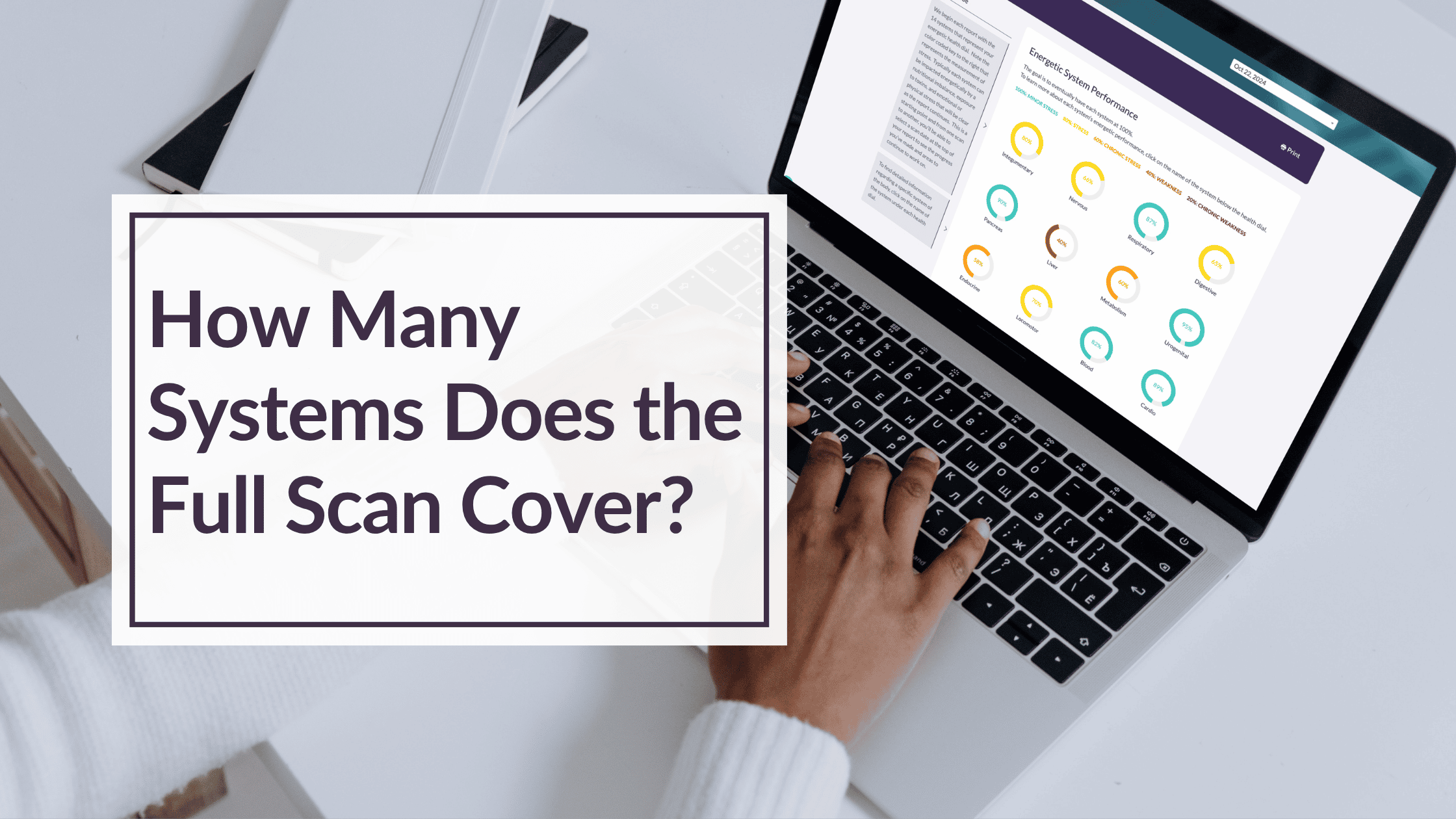
The Full Scan offers a broad, organized view of wellness concerns through simple hair and saliva samples. It analyzes over 2,500 data points to create a more detailed picture of how different body systems may interact. While it does not diagnose or treat any condition, it can help identify areas that appear stressed so you and your provider can make more informed decisions.
What Does the Full Scan Cover?
When you are dealing with low energy, digestive discomfort, unexplained sensitivities, hormonal changes, or other wellness concerns, it can be difficult to know where to begin. Several factors may place energetic stress on the body at the same time, and they aren’t always obvious.
The CBH Energetics Full Scan uses submitted hair and saliva samples to explore five major areas:
- Energetic System Performance
- Energetic Sensitivities
- Energetic Nutritional Imbalances
- Energetic Toxins
- Energetic Hormonal Imbalances
Here is a closer look at some of the most impactful subcategories.
Energetic Sensitivities
The Energetic Sensitivities section looks for foods, ingredients, and environmental factors that resonate with your submitted samples.
An energetic sensitivity is not the same as a diagnosed allergy. Allergies involve a specific immune response and should be evaluated by a qualified healthcare professional. Energetic sensitivities are patterns that may change as exposure levels, nutrition, stress, and the body’s overall balance change.
Dairy
The scan evaluates dairy foods and dairy-related components, including cow’s milk, whey, yogurt, cream, cheese, and lactose.
Environmental Factors
Environmental sensitivities may include mold, pollen, grasses, weeds, trees, dust, pet dander, cleaning supplies, lawn chemicals, and other everyday exposures.
Grains
The grain category may include rye, barley, quinoa, millet, buckwheat, rice, spelt, flour, and gluten. These results can help someone identify patterns that might otherwise be difficult to connect to a specific food.
Sugars
The Full Scan evaluates several types of sugars and sweeteners, including white sugar, brown sugar, fructose, high-fructose corn syrup, and stevia.
Additives
Food additives preserve products or change their flavor, texture, color, and appearance. This category can include food dyes, flavor enhancers, preservatives, and other ingredients commonly found in packaged foods.
These are just five examples of the sensitivity categories included. Check out our Full Scan sample report to see more.
Energetic Nutritional Imbalances
Eating a nutritious diet does not always mean the body is energetically balanced in every nutrient. The body may not be absorbing a nutrient efficiently, stress may increase its use, or other energetic stressors may affect its balance.
The Full Scan evaluates five primary nutritional subcategories.
Amino Acids
Amino acids help form proteins and support muscle function, metabolism, tissue maintenance, recovery, and neurotransmitter production. The report may identify energetic imbalances related to amino acids such as carnitine, glutamine, arginine, or ornithine.
Enzymes
Enzymes help the body break down food. Lipase helps digest fats, amylase helps digest carbohydrates, protease helps digest protein, and lactase helps digest lactose in dairy products.
Fatty Acids
Fatty acids contribute to cellular health and many other biological processes. The scan evaluates energetic patterns related to fatty acids such as DHA, EPA, alpha-linolenic acid, CLA, and GLA.
Minerals
Minerals support hydration, nerve signaling, muscle function, bone structure, metabolism, and other essential functions. The Full Scan may identify energetic imbalances related to magnesium, calcium, iodine, potassium, manganese, and other minerals.
Vitamins
The vitamin category evaluates energetic patterns involving nutrients that support energy, antioxidant activity, neurological function, immune health, and general wellness. Depending on the individual, findings may include B vitamins, vitamin E, and other important nutrients.
These results do not confirm a clinical vitamin or mineral deficiency. Check out our Full Scan sample report for a more detailed look at what this section may include.
Energetic Toxins
People encounter environmental substances through food, air, water, household products, work environments, and outdoor surroundings. The Energetic Toxins section explores whether the submitted samples resonate with several categories of toxin patterns.
A finding does not mean that an infection, toxicity, or disease has been diagnosed. It means that the sample produced an energetic match to the pattern evaluated.
Chemicals
Chemical exposures may come from plastics, fabrics, fragrances, cosmetics, detergents, construction materials, foods, and supplements. This category can encourage a closer look at someone’s home, workplace, diet, or personal-care products.
Heavy Metals
Heavy metals may be present in industrial materials, jewelry, coins, older building materials, food packaging, and contaminated environments. The scan evaluates whether the samples resonate with the metal patterns included in its database.
Mold and Mycotoxins
This category may include energetic patterns associated with molds, fungi, and mold-produced substances known as mycotoxins. Potential exposure sources include water-damaged buildings, soil, decaying vegetation, stored crops, and airborne particles.
Bacteria
The scan evaluates patterns associated with various categories of bacteria, including those commonly linked to environmental exposure, airborne transmission, personal contact, or insect vectors.
Parasites
This subcategory examines energetic patterns associated with parasites. Real-world exposure routes vary and may include insects, animals, food, water, or the surrounding environment.
These categories represent energetic patterns rather than confirmed exposure or infection. Check out our Full Scan sample report to learn more.
Energetic Hormonal Imbalances
Hormones act as chemical messengers throughout the body. They influence stress responses, energy, metabolism, sleep, mood, reproductive function, and body composition.
The Full Scan looks for energetic hormonal patterns and indicates whether a detected hormone appears energetically high or low.
Estrogen
Estrogen influences reproductive function as well as bone, metabolic, cardiovascular, and neurological processes. Both women and men produce and use estrogen, although typical levels and functions differ.
Cortisol
The adrenal glands produce cortisol, which plays an important role in the stress response. It also affects blood sugar regulation, metabolism, inflammation, sleep patterns, and energy availability.
Testosterone
Testosterone contributes to reproductive health, muscle tissue, bone health, blood flow, metabolism, and energy. It is important to both male and female physiology.
DHEA
DHEA is produced primarily by the adrenal glands. It acts as a precursor that the body can use to produce other hormones.
Thyroid Hormones
Thyroid hormones help regulate metabolism, energy production, temperature, and many other processes. Energetic thyroid patterns may be considered alongside findings involving the endocrine system, nutrition, toxins, and stress.
Hormonal patterns may overlap with endocrine stress, nutritional imbalances, resonating toxins, and other stressors. Check out our Full Scan sample report to learn more about the energetic hormone imbalances we look for.
Why 2,500 Data Points Matter for What the Full Scan Can Cover
The Full Scan is not a general overview. It analyzes more than 2,500 data points, which helps create a more detailed and nuanced report than a simple symptom checklist could provide. That level of detail identifies patterns across multiple systems instead of looking at one issue in isolation.
In functional and integrative medicine, this information is valuable because many health concerns don’t arise from a single cause. They often develop through the combined effect of stress, nutrient depletion, environmental exposure, microbial changes, and nervous system imbalance. A broader scan helps reveal how those pieces may be interacting.
What You Can Expect From the Process
The Full Scan is designed to be convenient and accessible at home. Using hair and saliva samples, it provides a noninvasive way to gather information about stress patterns in the body. This makes it an appealing option for people who want a deeper look at wellness concerns without a complicated testing experience.
Once your scan is complete, you’ll receive a personalized report outlining your results. You’ll also have the option to purchase a Balancing Regimen, which may include homeopathic and nutritional remedies selected based on your scan findings. If you’d like additional guidance in understanding your results, you can also choose to book a consultation with one of our certified practitioners.
Bioenergetic testing supports overall wellness and is not used to diagnose, treat, cure, or prevent medical conditions or replace medical care.
Is the Full Scan Right for You?
At CBH Energetics, the goal is to help you better understand the body’s signals in a clear and approachable way. While the Full Scan does not diagnose or treat any condition, it provides meaningful data that supports a more root-cause-focused conversation. If you are ready to learn more, explore the at-home bioenergetic Full Scan and the systems it covers today.
Learn more about the testing today.
DISCLAIMER: Balanced Health, LLC/CBH Energetics and any parent, subsidiary, affiliated, or related entities and companies do not provide medical advice or services. This post and the bioenergetic products and services offered by Balanced Health, LLC/CBH Energetics including, but not limited to, bioenergetic tests, bioenergetic scans, bioenergetic reports and related products and services (collectively the “Bioenergetic Products and Services”) are designed for educational and informational purposes only and are not intended to diagnose, treat, cure, or prevent any disease, condition, complaint, illness or medical condition and are not a substitute for professional services or medical advice. Testing is not used for the purpose of obtaining information for the diagnosis, prevention, or treatment of disease or the assessment of a health condition or for identification purposes.
